
Preparation: From “Maybe One Day” to the Start Line
I love it when I race a distance I have never done before. There is something freeing about it. It is a new challenge, a new training project, and mentally very low-stress because any finish time automatically becomes a personal record.
That was exactly how I approached the BMO Vancouver Half Marathon this year.
I had done several 10 km races before, including the Vancouver Sun Run, but a 21.1 km half marathon had always felt like a distant and slightly intimidating idea. It sounded like a “serious runner” distance. But after building more endurance over the past year, I realized that the training volume was actually much more achievable than I expected.
For me, the key was keeping the plan simple and sustainable: three runs per week.
- One long run to build endurance and confidence.
- One easy run to add aerobic volume.
- One tempo-style run to get more comfortable holding a faster effort.
That was it. Nothing fancy. I followed the plan as closely as real life allowed, and I prioritized the progressive long runs. My final two long runs were 16 km and 18 km. The 16 km run was done in beautiful Squamish after we went camping at Porteau Cove, and the 18 km run covered a big chunk of the Vancouver Seawall and nearby quiet neighbourhood streets.
I really like running in one big loop instead of repeating the same section over and over again. The changing views help keep my brain engaged, especially when the distance gets long. I also did most of my tempo runs on rubberized tracks to reduce impact on my legs.
For runners who are already comfortable with 10 km, training for a half marathon felt like a very natural next step. It is definitely a bigger commitment, but it did not require a complete lifestyle overhaul.
Using AI as a Training Coach
One thing I leaned on heavily during this training block was AI.
I fed my Garmin training and race data into ChatGPT and used it to help me build and adjust my plan. It created a week-by-week schedule based on standard endurance training principles, which I cross-checked against several running books that I either bought or borrowed.
The most useful part about using AI was not just making a plan. Most books offer that. It was the ability for the AI coach to adapt to me specifically.
Real life always interferes with training. Kids get sick. Work gets busy. Camping trips happen. Some days the legs just do not have it. The AI coach helped me adjust the plan when things changed, without making me feel like the whole training block had fallen apart. I could simply feed it my training logs and ask it to adjust my remaining sessions based on what I had actually done.
I also asked it to review my training and give me constructive feedback. It correctly pointed out that I had a strong preference for low-intensity Zone 2 running, but that I could have benefited from a bit more structured tempo work. It gave my training block a B-, which felt both mildly insulting and probably fair.
Course Visualization: The Best Last-Minute Homework
The night before the race, I found an excellent full race POV video of the BMO Vancouver Half Marathon course. I watched the whole thing and visualized myself running it.
This turned out to be extremely helpful.
When I was actually on the course the next morning, I already had a mental map of the major turns, climbs, descents, and crowd sections. I knew where the long downhill started. I knew where the Chinatown climb would appear. I knew that the Stanley Park section would have another hill when the legs were already tired. I even knew where the most epic cheering squads tend to be.
Hint: on course left in Chinatown, look for the teams of dragon dancers.
For a first-time half marathon, this kind of course preview made the whole race feel much less mysterious. It reduced the mental load. Instead of constantly wondering what was coming next, I could focus on pacing, breathing, and enjoying the experience.
Race Morning: A Different Energy from the Sun Run
The BMO Vancouver Marathon usually takes place in the first week of May. It has a reputation for beautiful weather, but also for being surprisingly hot because of the long exposed sections.
The half marathon starts early, at 7:00 AM, near Queen Elizabeth Park. Runners were asked to arrive about an hour before the start, so it was an early morning. The marathoners start at 8:30 AM, and by the time they really get into it, the temperature can rise even further.
The energy felt very different from the Vancouver Sun Run, which had taken place two weeks earlier. The Sun Run is a giant community event. There are walkers, kids, costumes, strollers, families, first-time runners, and people just out for fun. It has a party atmosphere.
The BMO Half Marathon felt more serious. Not unfriendly, just more focused. Most people were wearing their own running gear instead of the race shirt. Some runners were warming up on side streets. Many were quietly hydrating, checking their watches, and standing in very long lines for the portable toilets.
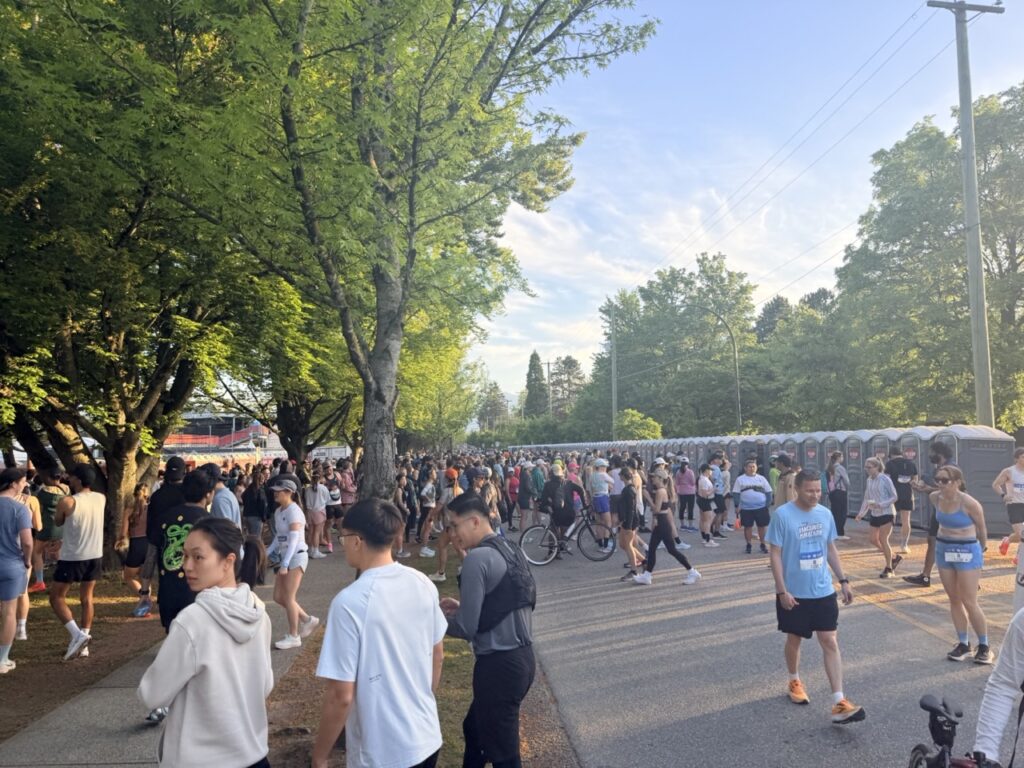
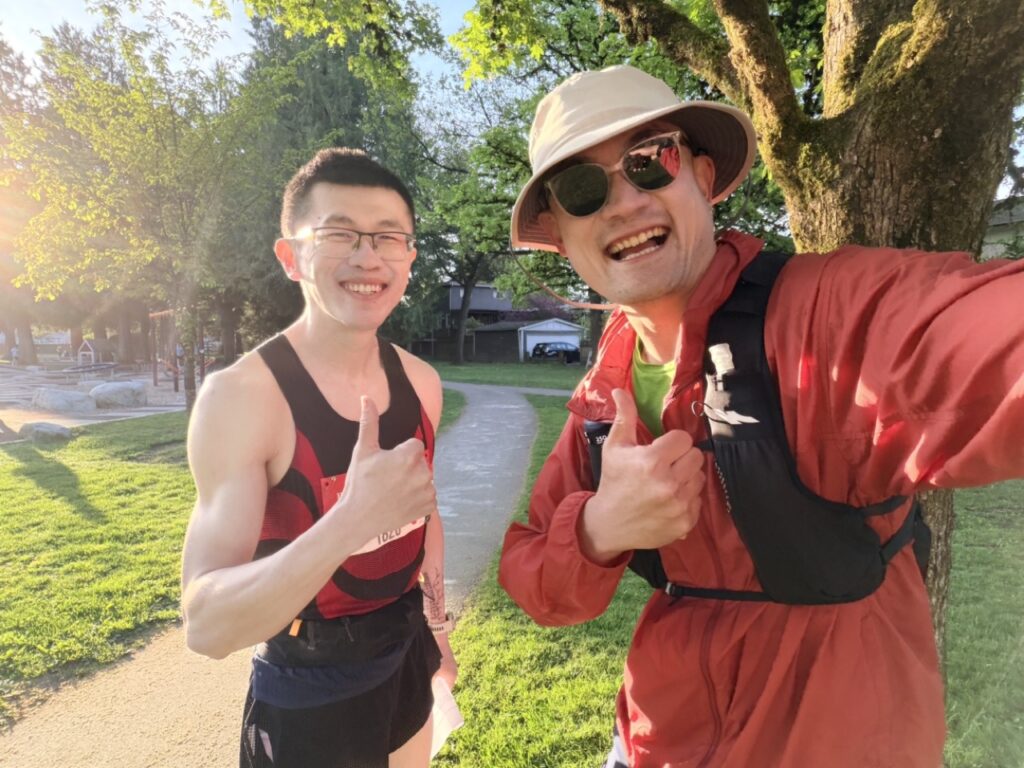
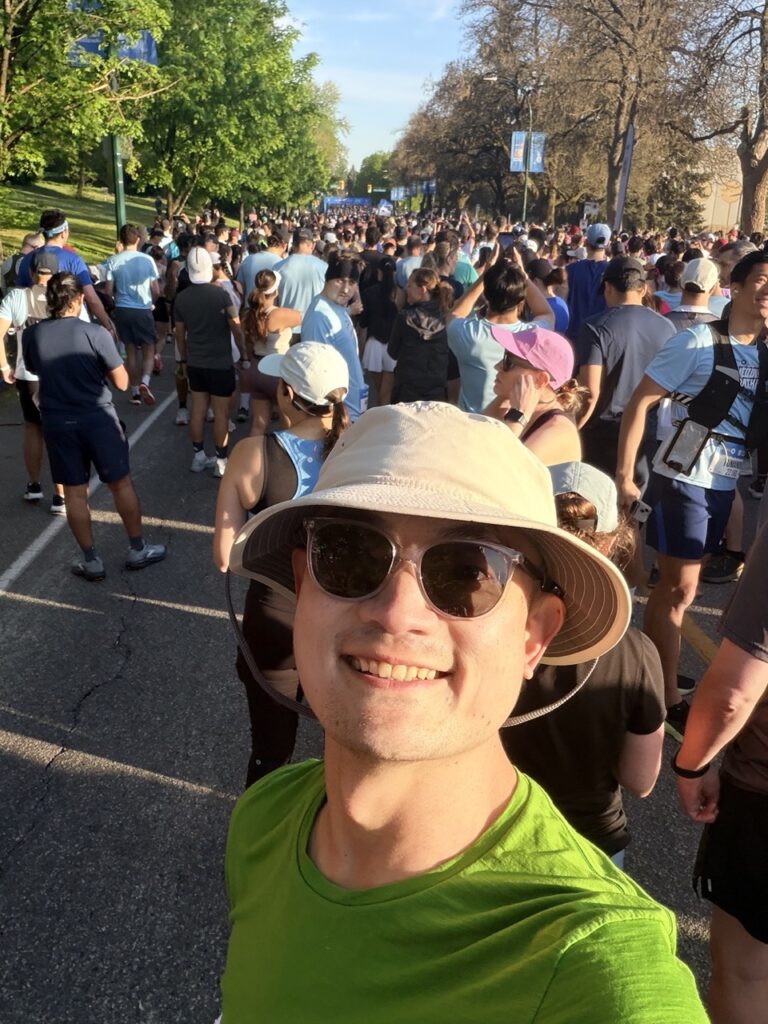
Lesson learned: use the washroom early, and expect the lines to be long.
My Pacing Plan
I came into the race with a pacing plan.
My main goal was to stay below my lactate threshold heart rate until the final 4 km. I knew I could not afford to race the first half too aggressively and then suffer through the final third. The plan was to run controlled, especially early, and save the harder effort for the end.
This was especially important because the BMO Vancouver Half Marathon course is not flat. It is a very runnable course, but it has several key sections to note:
- The long downhill from Queen Elizabeth Park to Cambie Bridge in the first 4 km.
- The climb from Chinatown toward the Central Library around 7 km.
- The Stanley Park climb around 14.4 to 15 km.
- The final uphill push on Pender toward the finish.
The first 4 km are basically a continuous descent. It is tempting to bank time here, but running too fast downhill early in a half marathon can punish the quads later. My heart rate was actually a little tricky to interpret here because the downhill made the pace feel easy, but the legs were still absorbing impact.
So I did not chase pace. I let the downhill come to me and tried not to get carried away.
The First Climb: Chinatown to Central Library
After the downhill start and the Cambie Bridge crossing, the course flattens out around Science World and Chinatown.
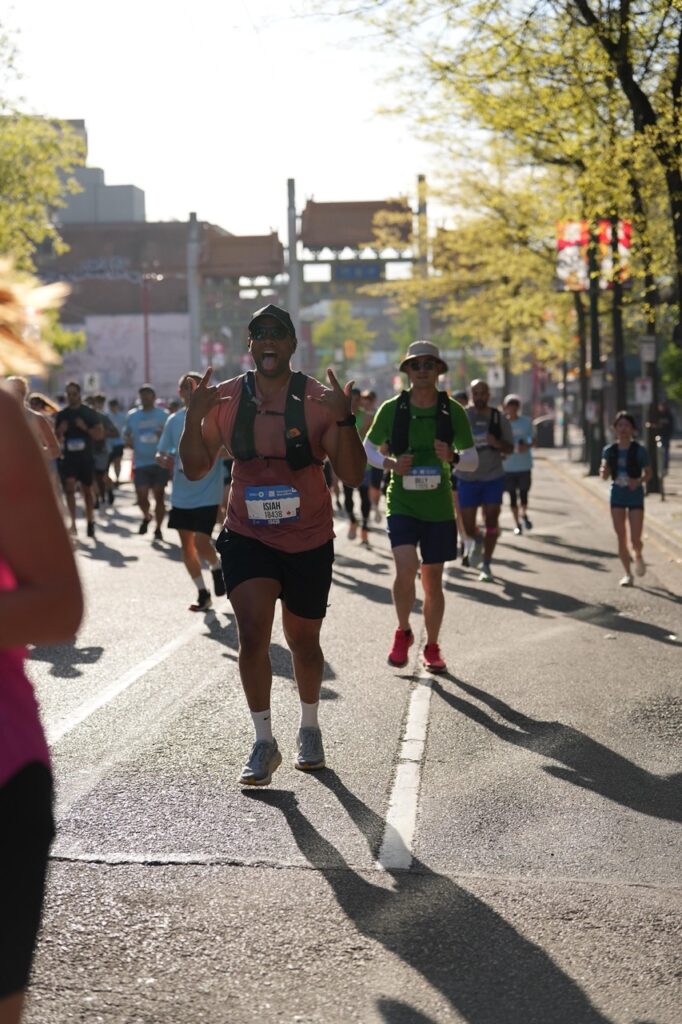
Around the 7 km mark, the first major uphill begins as the route turns out of Chinatown toward the Central Library. This is the longest uphill section of the race, roughly 800 metres.
At this point, everyone was still relatively fresh. Most runners around me simply adjusted their pace and kept running. I took an energy gel around here, which worked well with my plan.
This climb felt very manageable. It was noticeable, but not demoralizing. The crowd support helped, and there was still a lot of race-day energy.
English Bay and Stanley Park: The Beautiful Middle Section
After that, the course became increasingly scenic.
Running through English Bay and toward Stanley Park was one of the highlights of the race. This is where the BMO course really shows off Vancouver. The views, the water, the trees, the crowds, and the feeling of moving through familiar city landmarks all made the middle section pass surprisingly quickly.
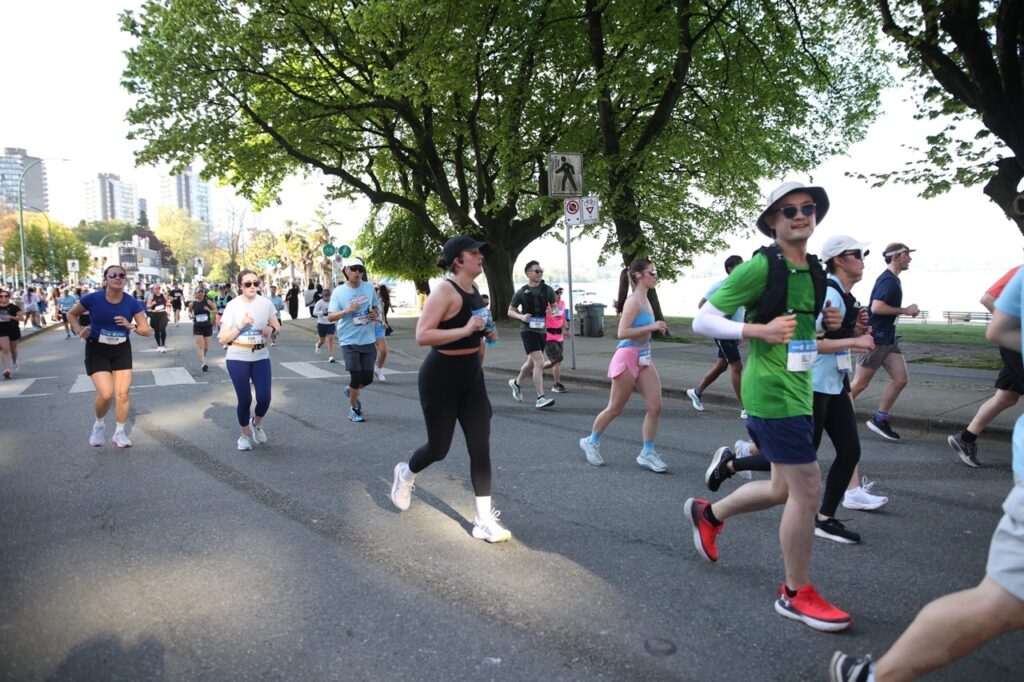
The full marathon course runs the entire outer perimeter of the Stanley Park Seawall, but the half marathon cuts into the woods.
That shortcut is beautiful, but it comes with a price: Pipeline Road.
The Second Climb: The One I Actually Felt
The second substantial uphill comes around 14.4 km to 15 km in Stanley Park on Pipleline Road.
This one felt very different from the first climb. By this point, I had already been running for well over an hour. The legs were no longer fresh. My heart rate was creeping higher, and I was much more aware of every incline.
My AI coach had recommended that I stay below lactate threshold until the last 4 km. To follow that plan, I had to slow down significantly on this hill. Then I realized something useful: I could power-walk almost as quickly as I could jog uphill at that effort level.
So I walked.
Not because I was giving up, but because it was the most efficient choice in that moment. It let me use slightly different muscles, gave my running muscles a short break, and kept my heart rate under control. It almost felt like an active stretch.
As soon as I reached the top, I started running again. I then caught up to several runners who had run the whole hill but were now breathing heavily and slowing down.
That was a satisfying lesson: strategic walking can be faster than stubborn running.
The Deceptive Final 5 km
After leaving the Stanley Park forest, we returned to the Seawall.
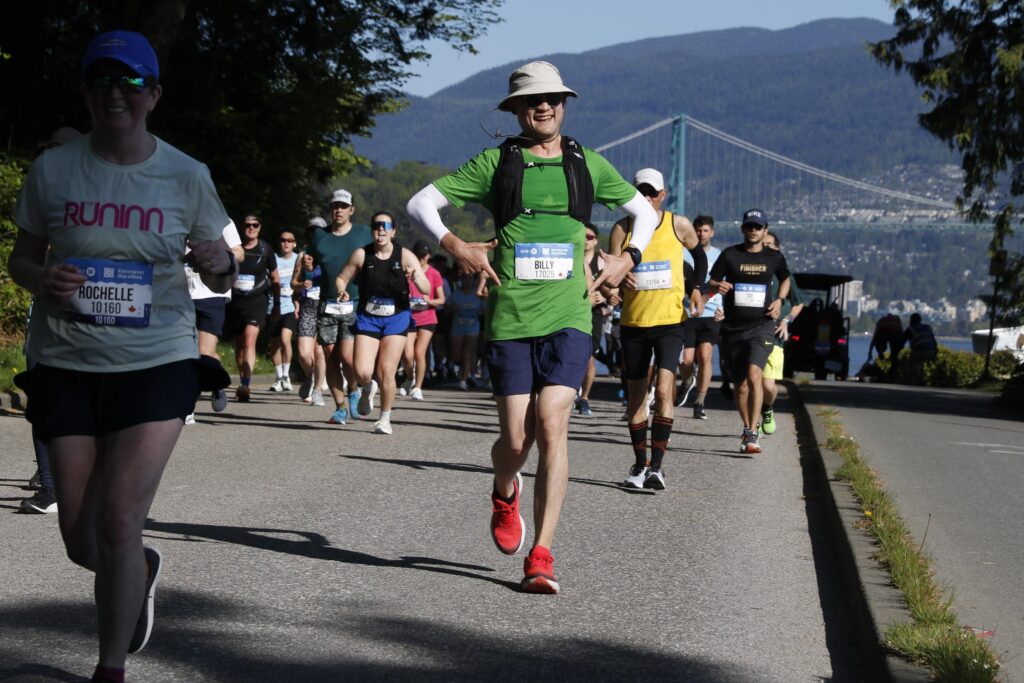
This part of the course was mentally tricky. The route forms a deceptive Z shape, so it looks like the finish should be close, but there are still several kilometres left.
At this point in a half marathon, 5 km sounds both short and very long.
My legs were sore, but I still felt in control. I had carried two 250 mL soft flasks in my running vest and skipped the water stations. That was a worthwhile trade-off for me. Carrying 500 mL of water adds a bit of weight, but it also meant I could avoid the congestion and slowdowns at aid stations. I drank when I wanted, not when the course offered it. Taking small sips is way easier than trying to gulp down a cup of water within the garbage collection area too.
For a runner around my pace, I think that trade-off was absolutely worth it.
The Finish: A Slightly Premature Hero Sprint
After turning onto Pender Street, the course heads into the final uphill stretch toward the finish.
This is where I did a self-check and realized I had left too much in the tank.
So I sped up.
First around 6:00/km pace. Then 5:30/km. Then 4:30/km.
At one point, my watch showed a ridiculous 3:25/km pace, which is not a pace I have any business claiming after running 21 km.
The crowd went wild though. Shouts of ‘YEEAAAHH BILLY!!!” could be heard from both sides but my vision was tunneling from the effort.
And then I realized that what I thought was the finish line was not actually the finish line… There were still about 300 metres to go! LOL! Why would they put a fake arch there… (I think it’s for the TV camera but still)
My heart rate caught up with me very quickly, hitting my current max HR of 190bpm, and I could not maintain that silly sprint. So I backed off to a more reasonable pace and crossed the real finish line.
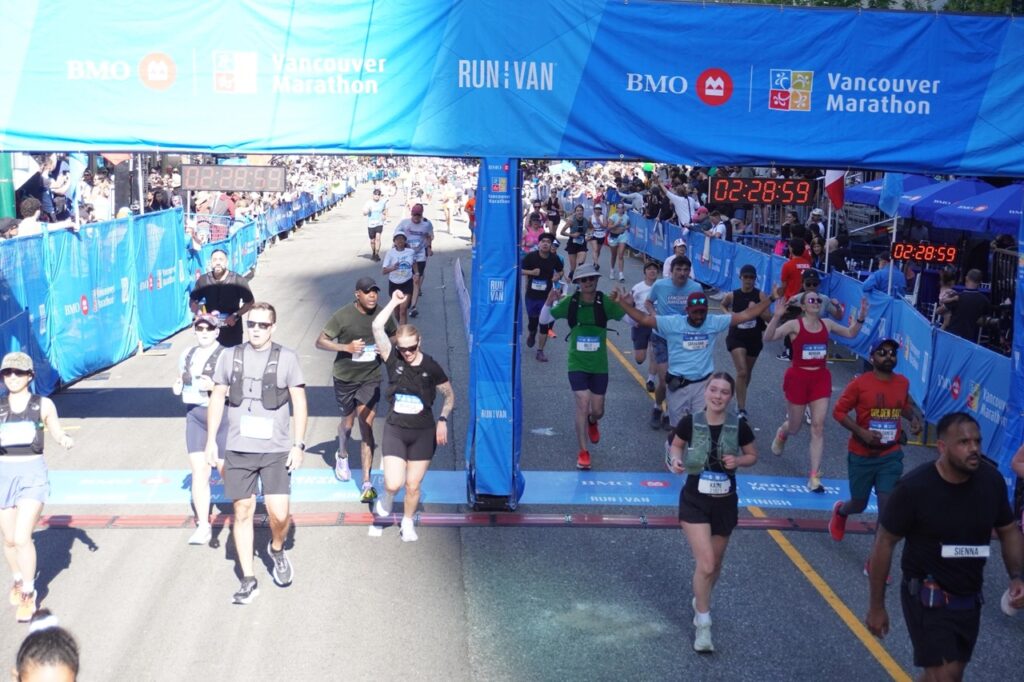
Final time: 2:10:13.
My first half marathon was done.
Note to my AI coach: excellent pacing plan overall, and it definitely helped me stay sustainable around an average pace of 6:00/km. But if I had enough energy to launch an accidental near-max sprint before the actual finish line, maybe the plan was a little too conservative.
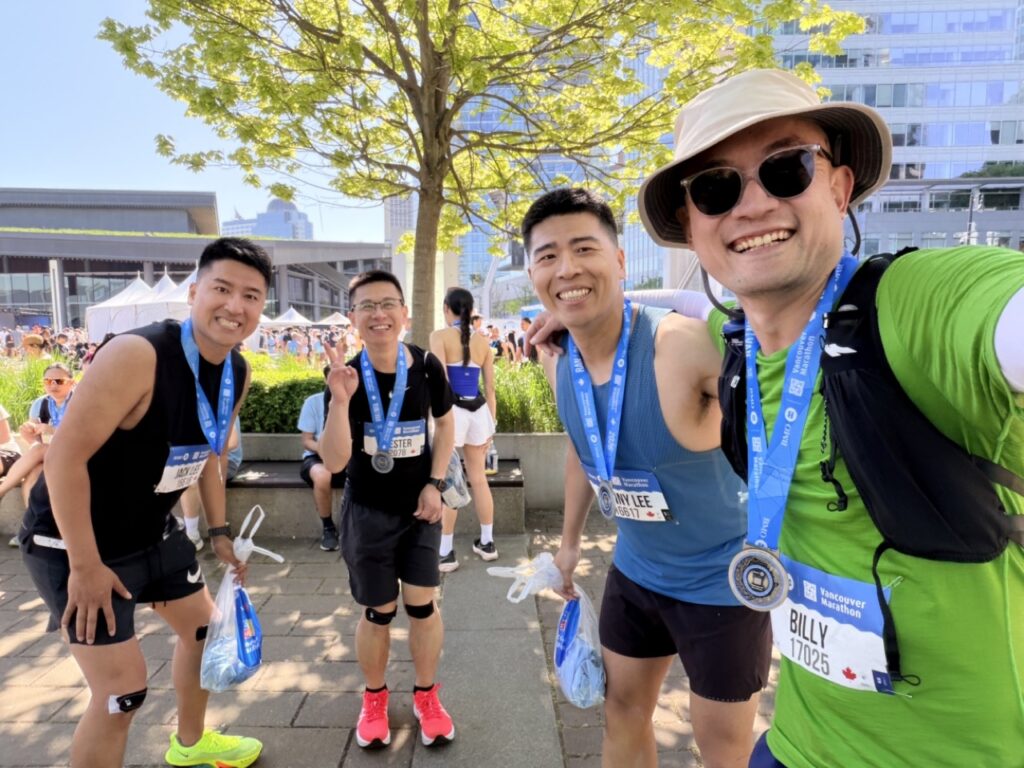
The Aftermath: Sore Legs and Useful Lessons
My legs were sore for about two days.
The hardest-hit areas were my IT bands, tensor fasciae latae, and most of the muscles in my thighs. Stairs were difficult for the first 24 hours, especially going downstairs.
This made sense. The race had a long downhill early, several climbs, and a final push. Downhill running in particular can be hard on the quads and lateral knee structures, even when the cardiovascular effort feels manageable.
For recovery, I kept things gentle. No aggressive stretching. No heroic foam rolling. No deep massage gun punishment on sore tissues. Just easy walking, light movement, hydration, food, and patience. The goal was to encourage circulation, not to beat up already-damaged muscles.
By day 3, I was back in the pool and on the bike, shifting focus toward the next goal: an open-water sprint triathlon.
Final Thoughts: Was the Half Marathon Worth It?
Absolutely.
The BMO Vancouver Half Marathon was challenging, scenic, well-organized, and just the right next step after becoming comfortable with 10 km races. It was long enough to require real preparation, but not so long that training took over my life.
The biggest lessons I would carry forward are:
- Preview the course if you can. Knowing the hills and turns ahead of time really helps.
- Do not overrun the early downhill. Your quads will pay for it later.
- Use effort, not just pace, to determine how fast to run, especially on hills.
- Strategic walking on a steep section can be smart, not weak.
- Carrying your own water can be worth it if you want to avoid aid station congestion.
- Make sure the finish line is actually the finish line before launching your heroic sprint.
For a first half marathon, I could not have asked for a better experience. It was hard, beautiful, slightly ridiculous at the end, and deeply satisfying.
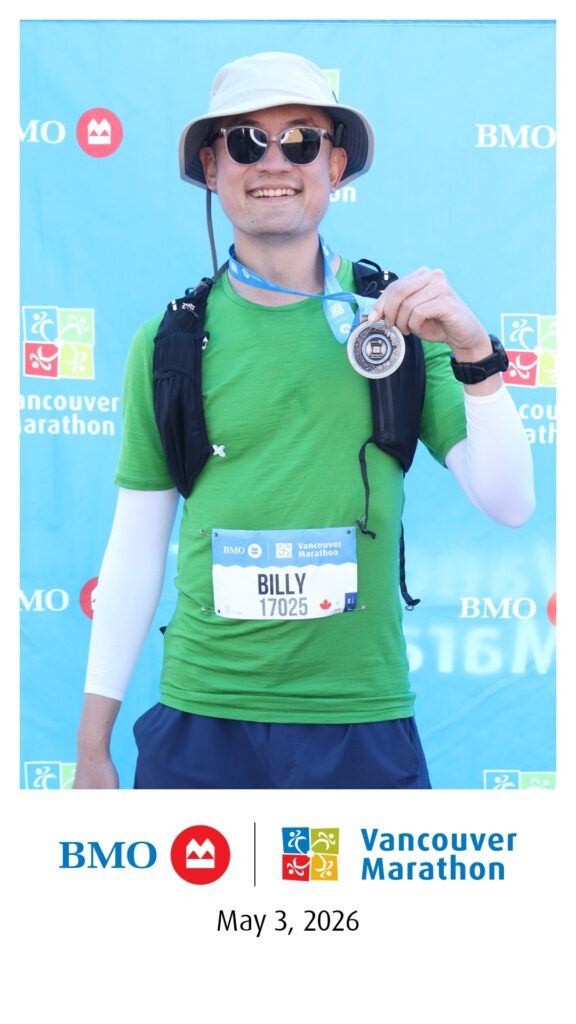
Now, onto the next adventure.
Discover more from Outdoor Family
Subscribe to get the latest posts sent to your email.

Well done brotha!