
- Parking:
- Harrison Hot Springs beach front parking (seasonal parking fee required from May 15 to Sept 15)
- Launching
- Charlie Wilson Dock or nearby sandy beach launch
- Pull out:
- Difficulty – Harrison Lake is prone to strong northerly winds, which can carry sizable waves from the side. The first half of the river to Morris Creek is slow, and the second half downstream from Morris Creek is shallow and brisk. No white caps or actual rapids were observed.
- Boat traffic – moderate to heavy boat traffic
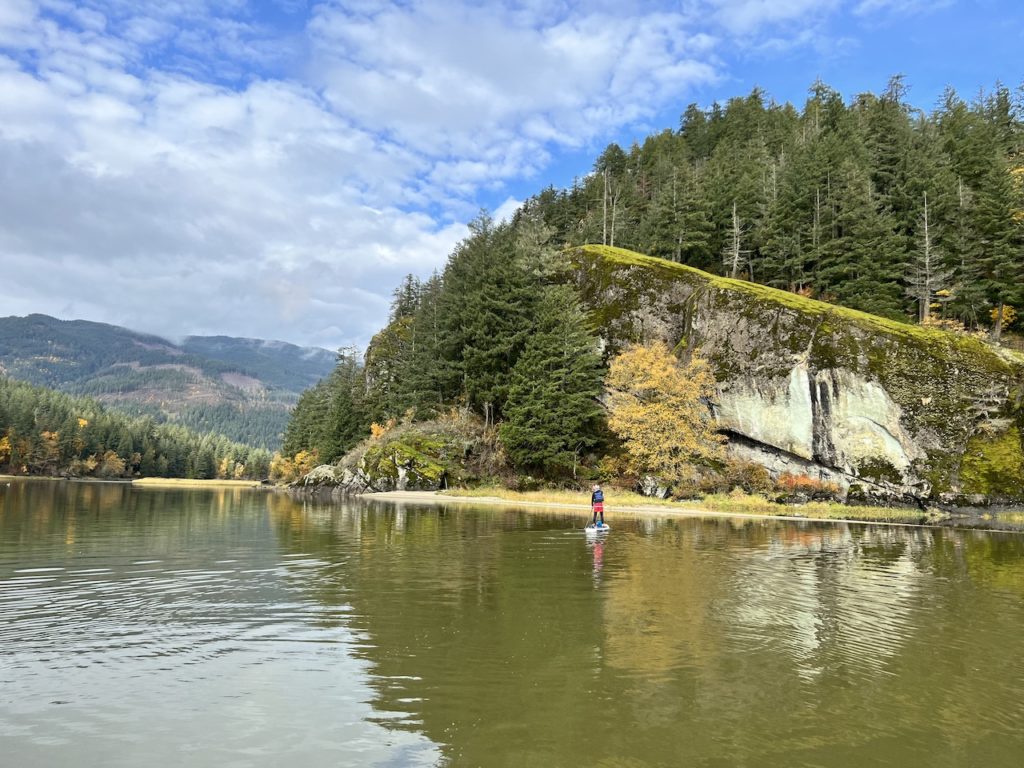
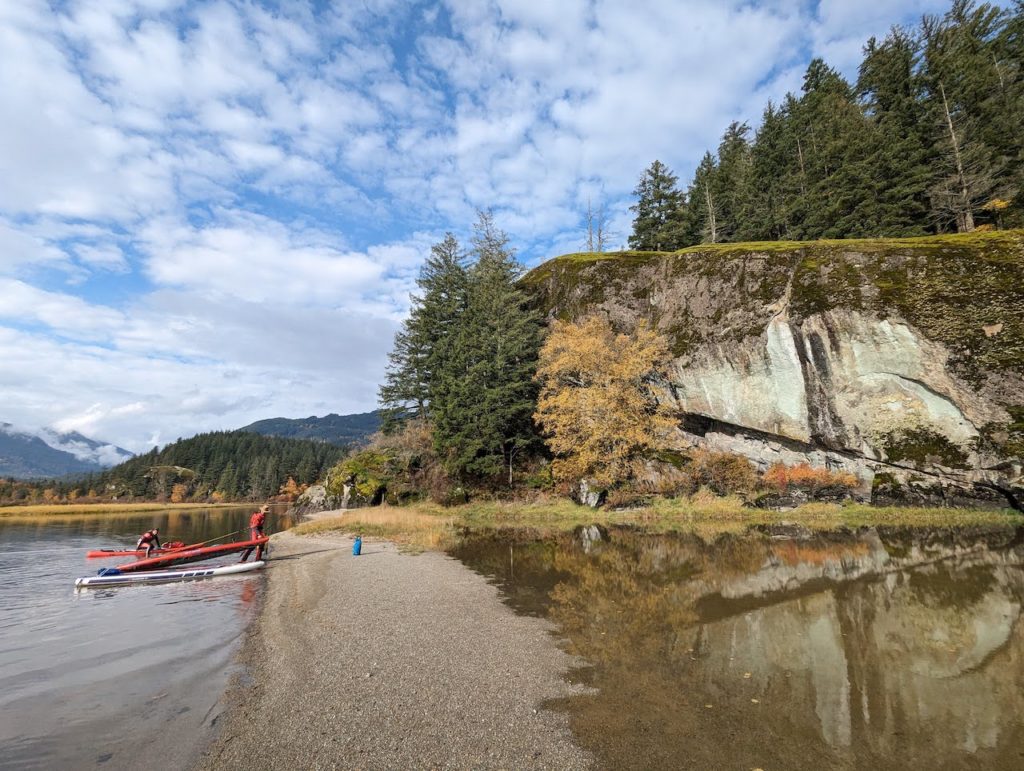
- View – a glimpse of Harrison Lake, deep valley, cliff faces with petroglyth
- Other paddle highlights – during the fall, epic salmon and eagle runs. Reportedly the most productive salmon stronghold river in Canada and largest congregation of eagles in the world
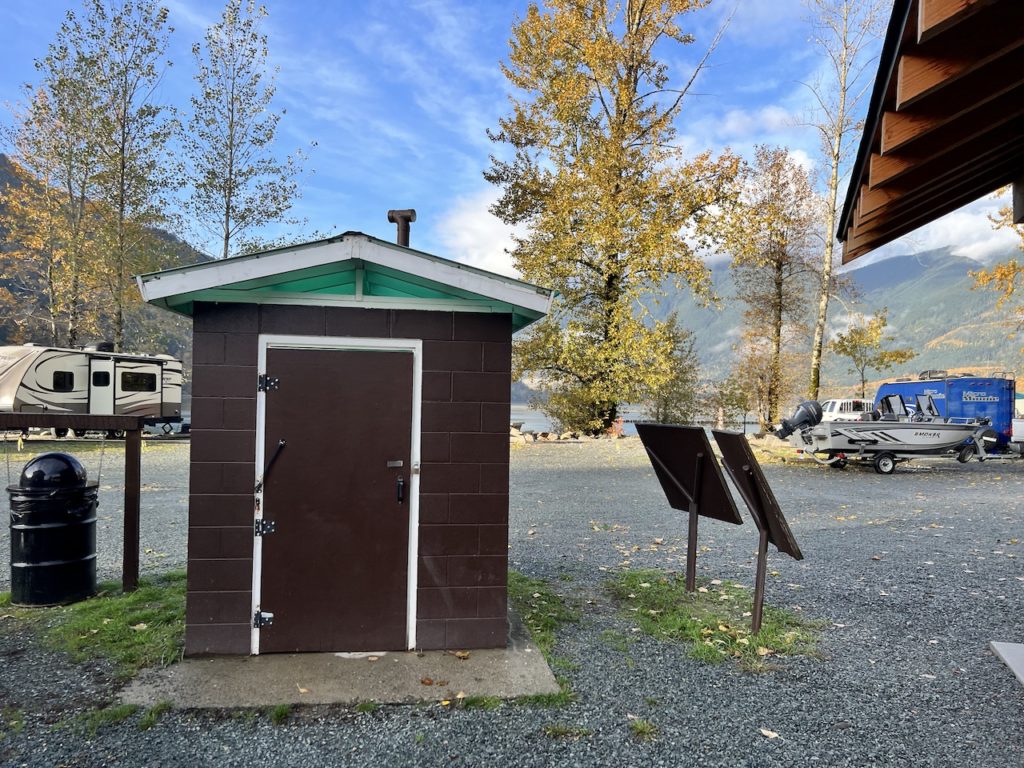
- Facilities – pit toilet and campground at Kilby Park. Public washroom, restaurants, and shops at Harrison Hot Springs
- Overall score – 9/10
I’ve wanted to paddle on the Harrison River for about a year, ever since I read about the epic salmon run in the fall.
The logistics made it a little tricky to plan though: the drive from Vancouver takes about 1hr and 45mins; the one-way downstream paddle necessitates at least two cars for shuttling; and the 18km paddle on the river, which flows pretty quickly in many sections, requires confidence in quick maneuvering in shallow water. And the Fall weather is always temperamental, throwing rain, wind, cold temperatures, and low water levels at the paddlers.
That’s to say, this trip needs a minimum of two intermediate paddlers with 2 cars and the time and willingness to make the drive, when the weather is acceptable within the window of the salmon run, and enough day light to enjoy it. Basically October and November are the only two months in which to attempt a salmon paddle, November being the prime.
And it so happened that all of the above conditions aligned for us this weekend! Through the power of Facebook, Sylvie, Howard and I met up and enjoyed a fantastic paddle.
It was great to have Sylvie, who has paddleboarded the river many times and could tell us some insider tidbits about where the eagles hangout and such, and Howard, who encouraged us to explore all the little waterfalls, cliff faces, and side channels.
We met up a Kilby to park our pull-out car, and drove to Harrison Hot Spring to launch, about 20 min drive away.
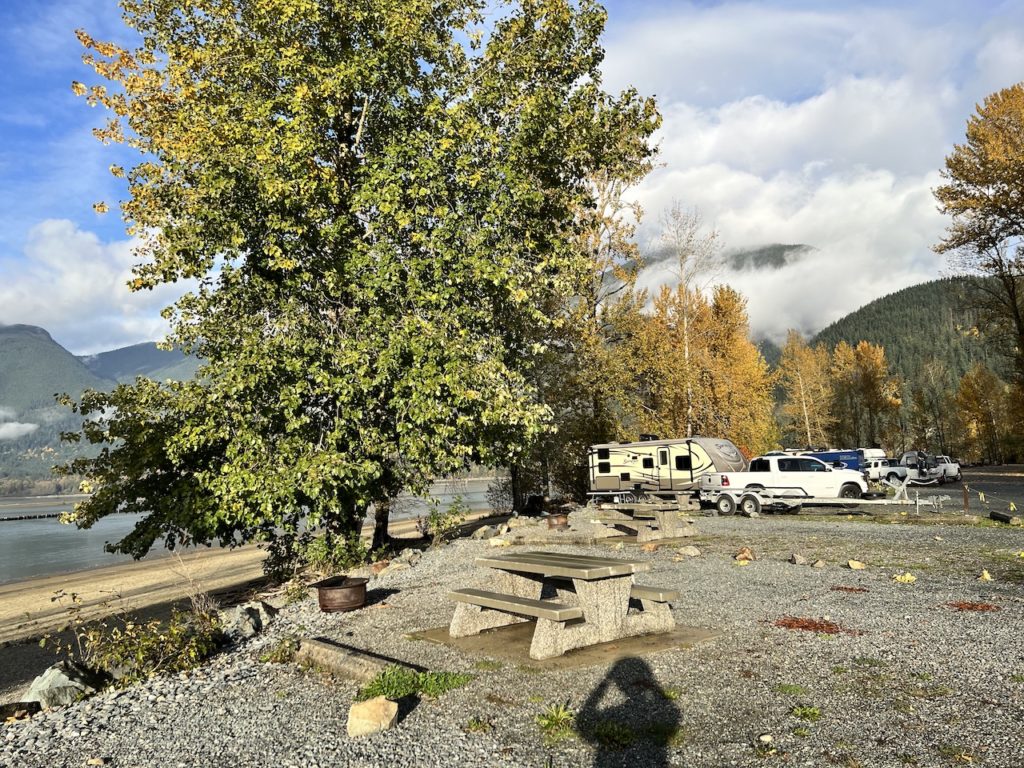
Kilby is an unique park. It’s officially Kilby Provincial Park, but it’s managed by Kilby Heritage Society, a non profit organization. As a result, booking for the campground is done on their private website. Majority of the sites are on the river’s edge, but they are very close together with no privacy barriers. Some sites are right off the parking lot, which is pretty awkward.
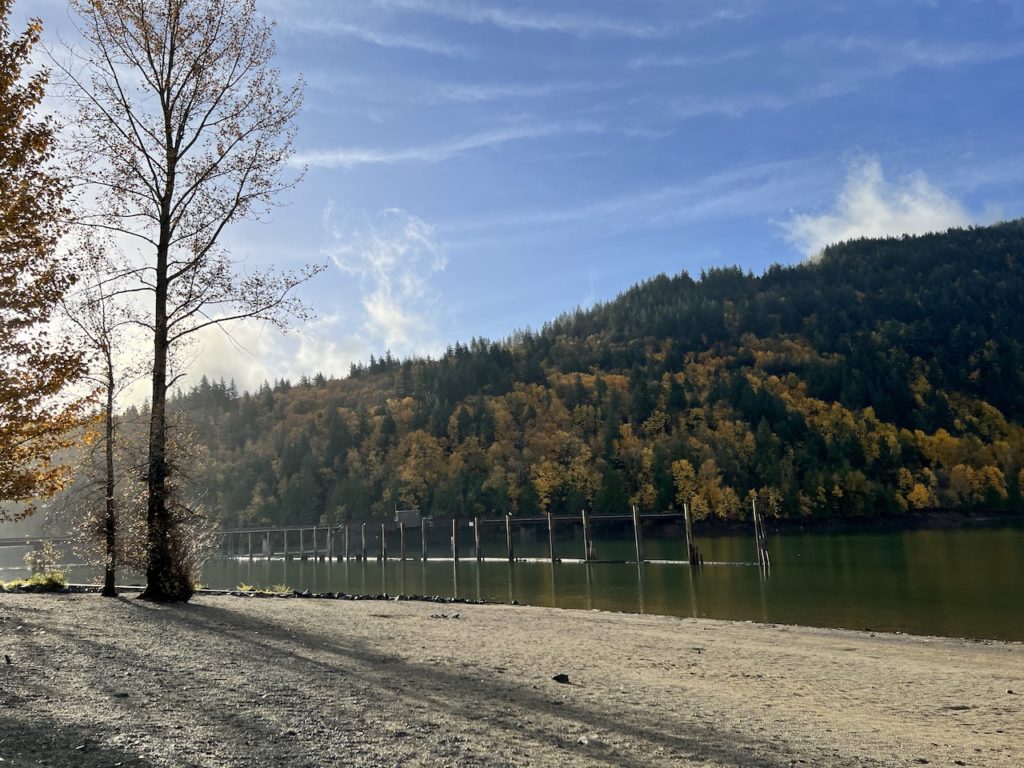
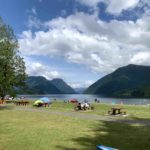
Launching from Harrison Hot Springs is straightforward. Per the government’s website, the “Charlie Wilson Float Plane Dock” is available for short term boat moorage for drop off and pick up purposes, and there’s also a sandy beach nearby.
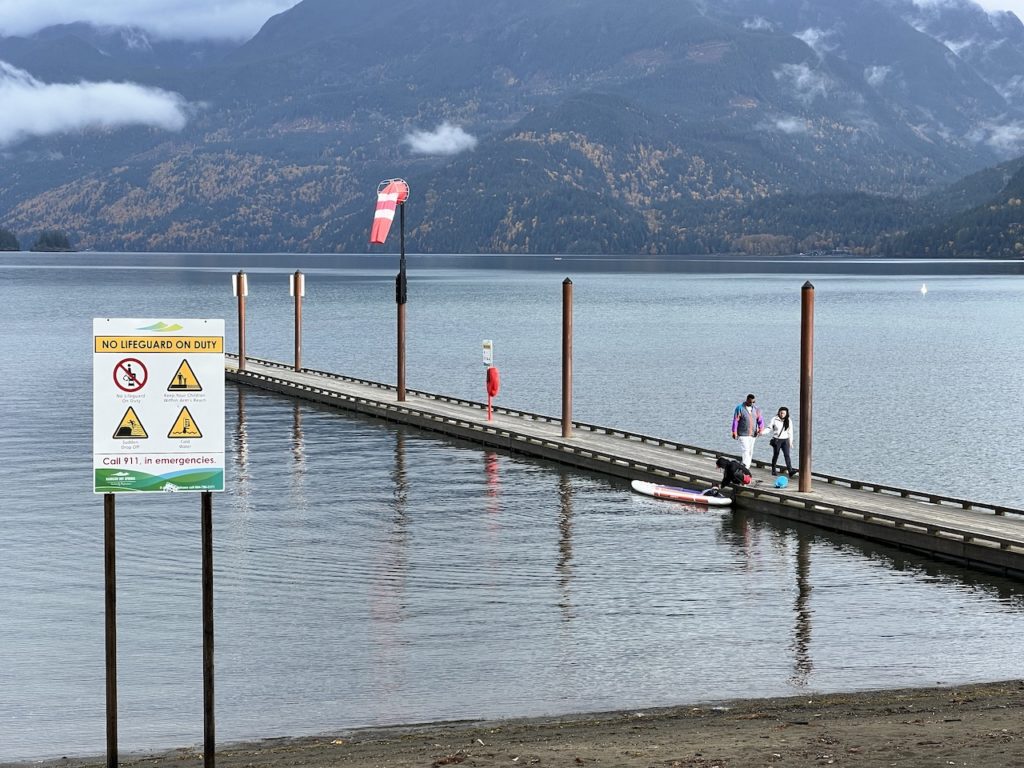

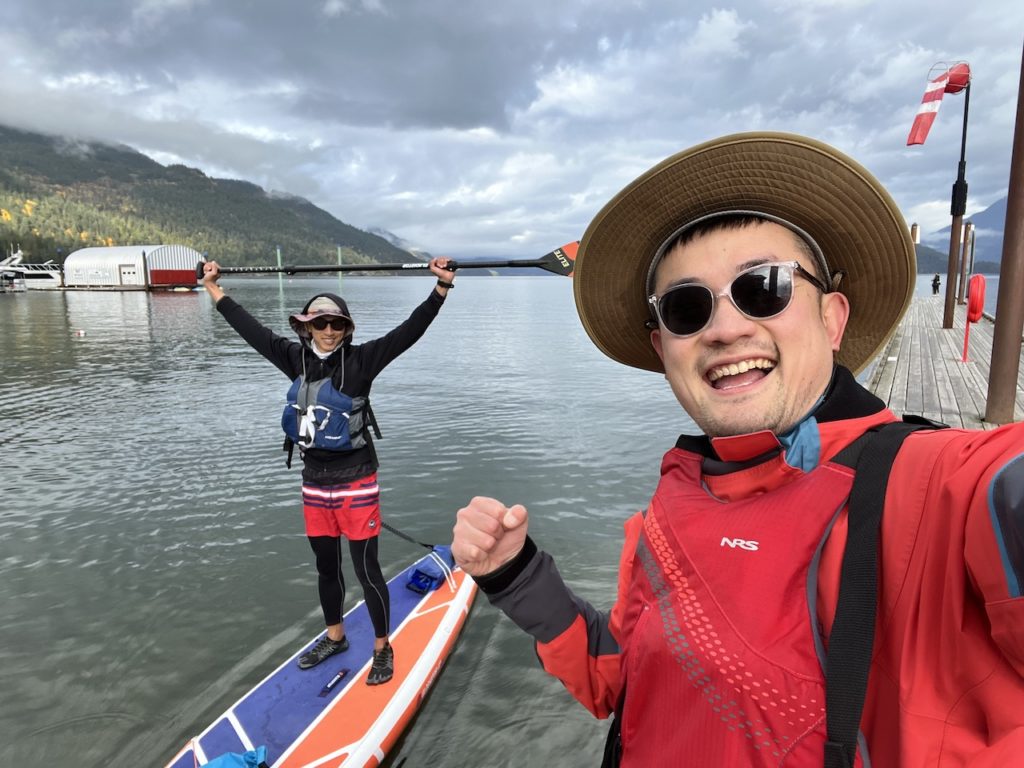
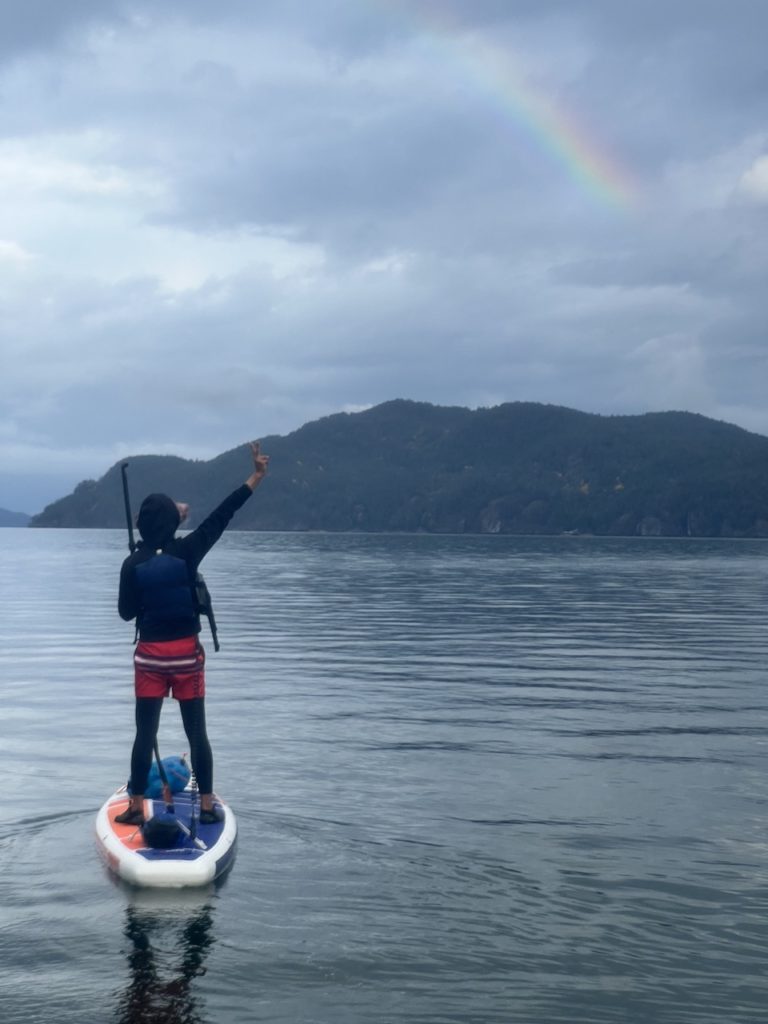
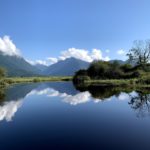
We felt incredible as not only did the forecasted drizzle not materialize, the sky was actually breaking a little. Even the notoriously choppy Harrison Lake was sleepy and calm. Just as we thought we couldn’t have chosen a better day, we were greeted with a rainbow.
We turned around, and a beam of sunlight was shining on the iconic Harrison Hot Springs Resort.
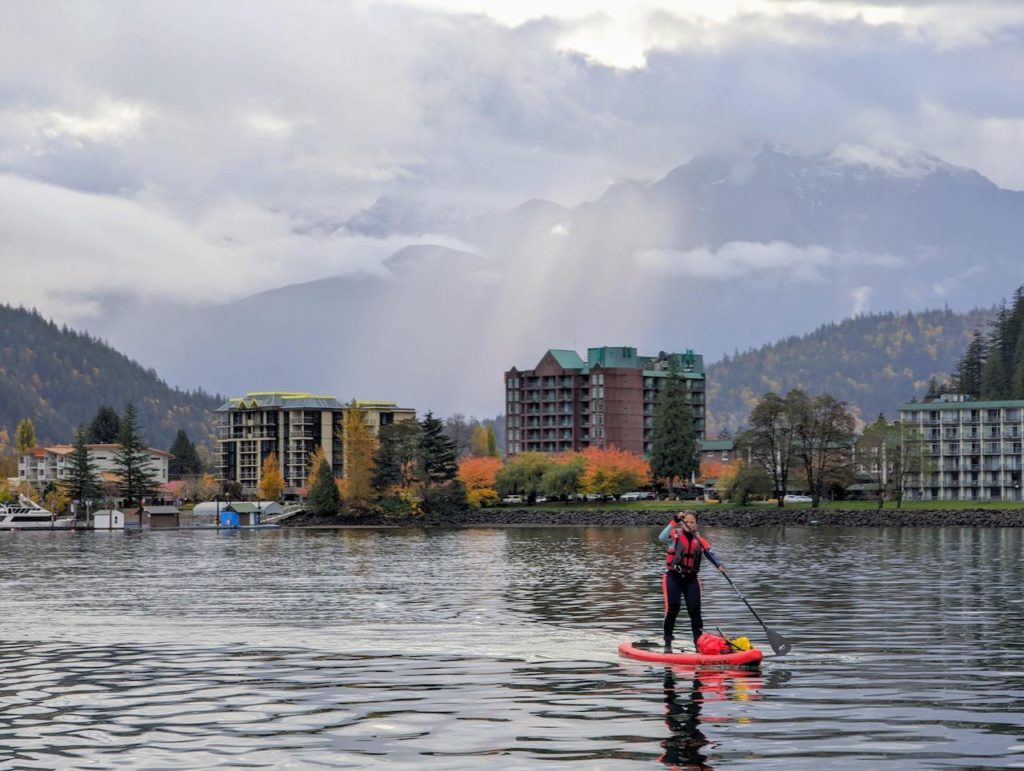
With these amazing sights, we were energized and push towards the river. It’s about 1km to round Whippoorwill Point to get to the river, which can be the hardest 1km if the northerly wind was blowing.
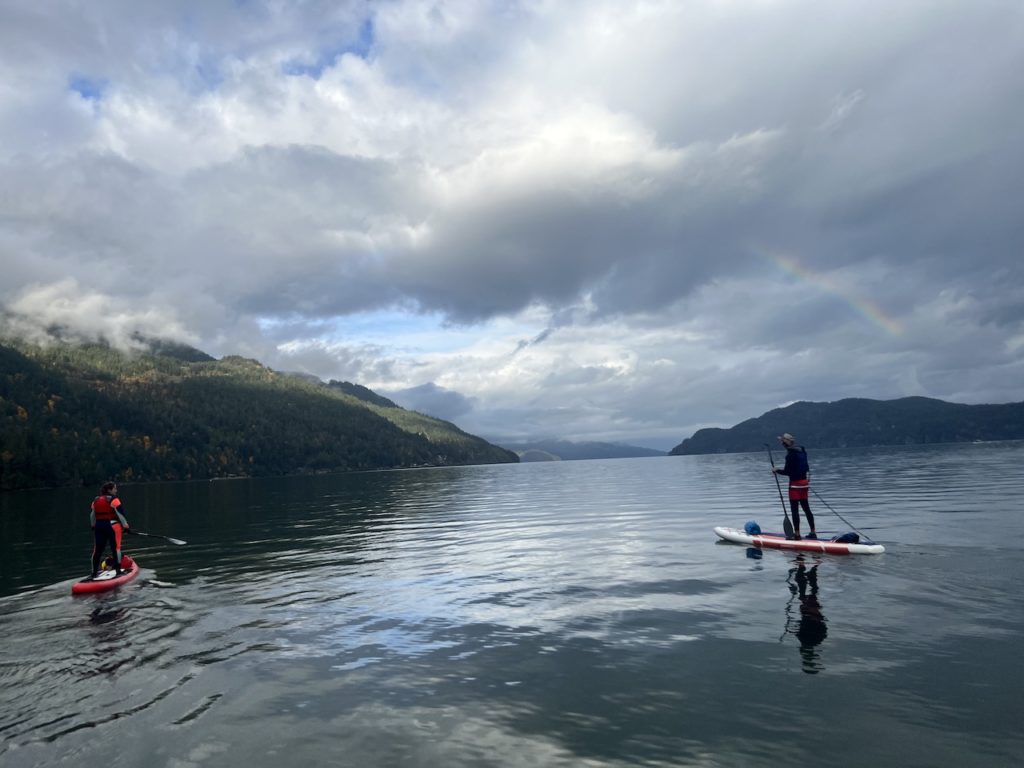
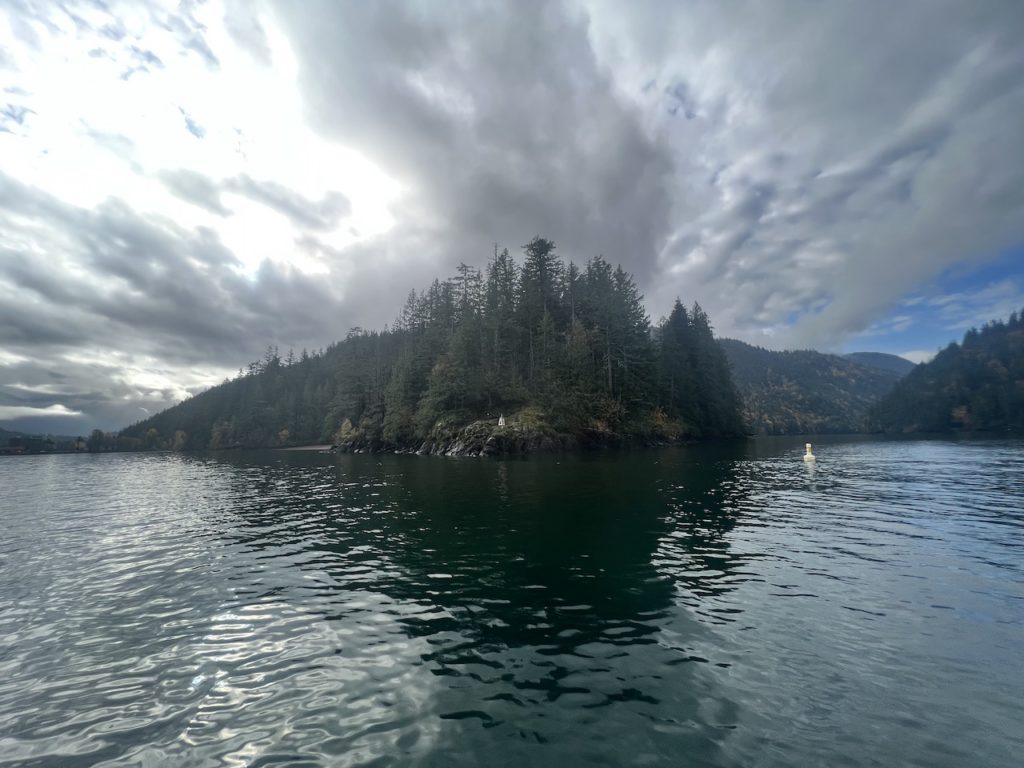
The upper section of the river is flanked by pretty high slopes, which provide a good barrier from the blowing winds from the lake.
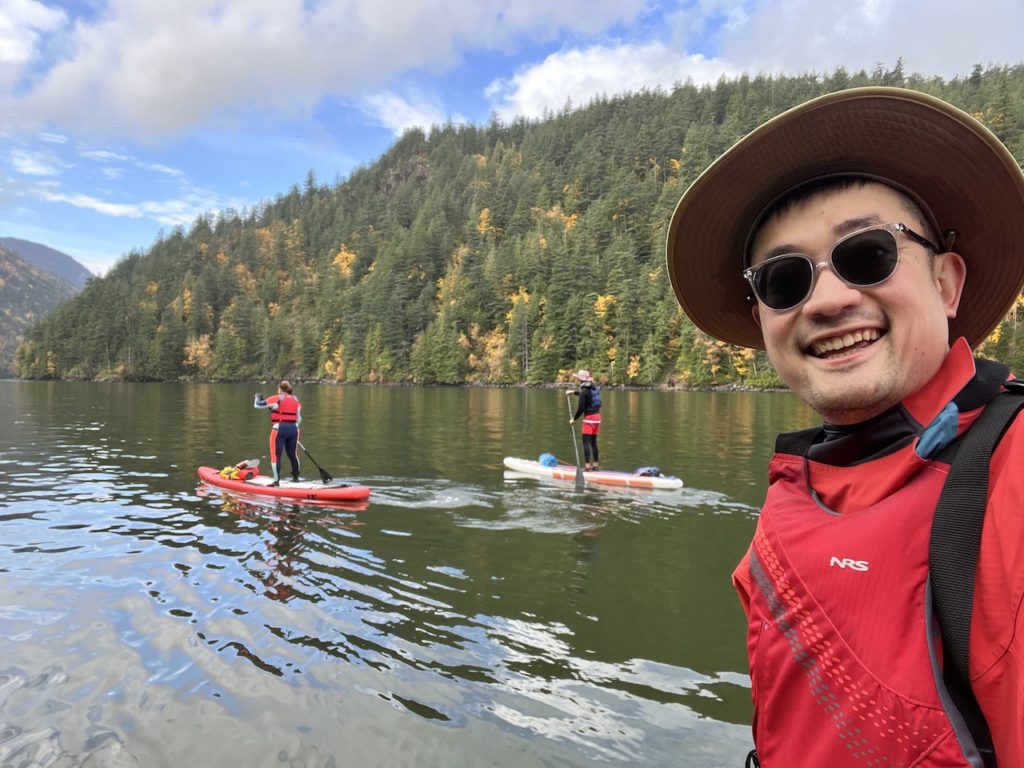
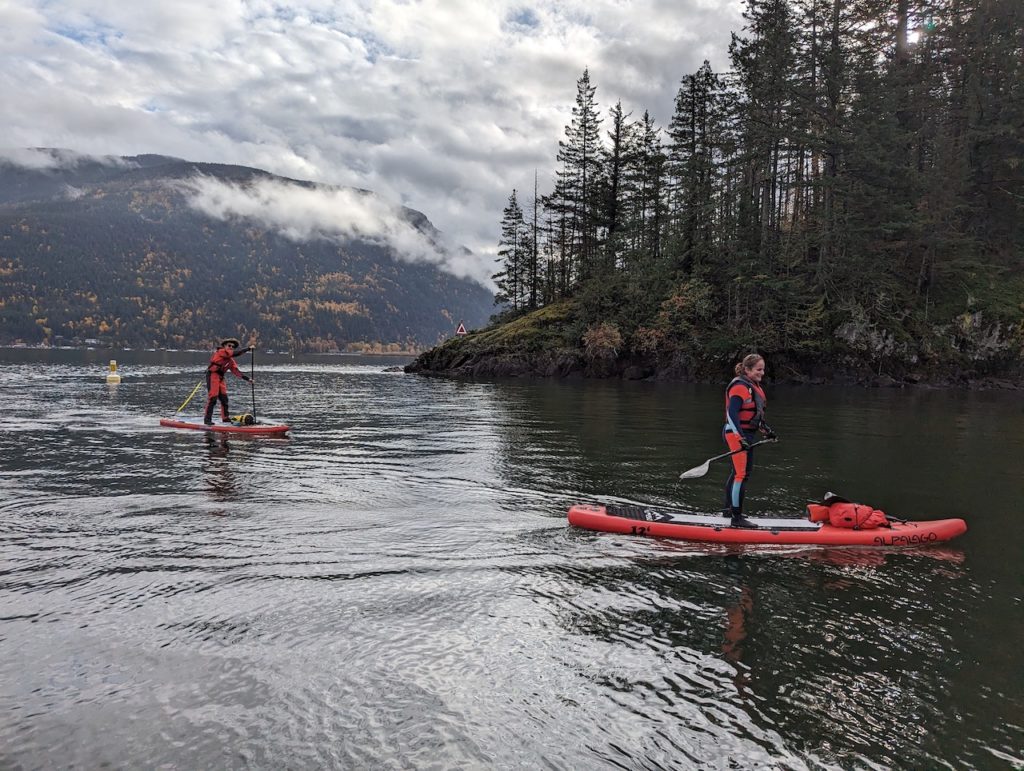
The fall colors were in full display, but mostly yellow leaves and not a lot of red color.
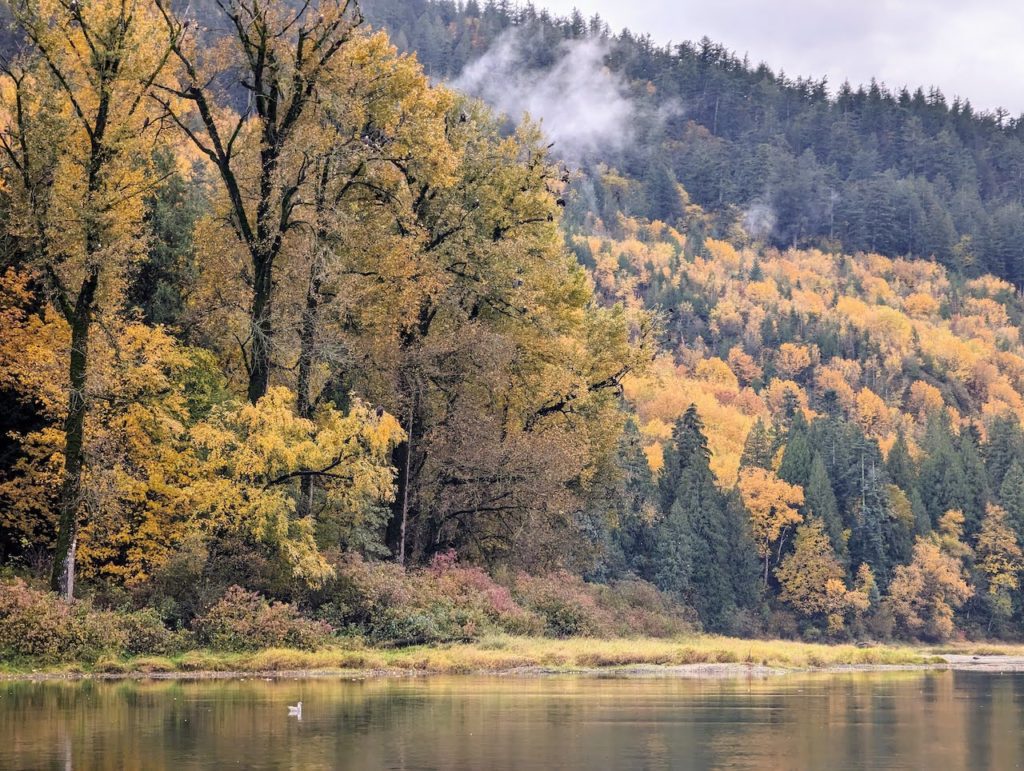
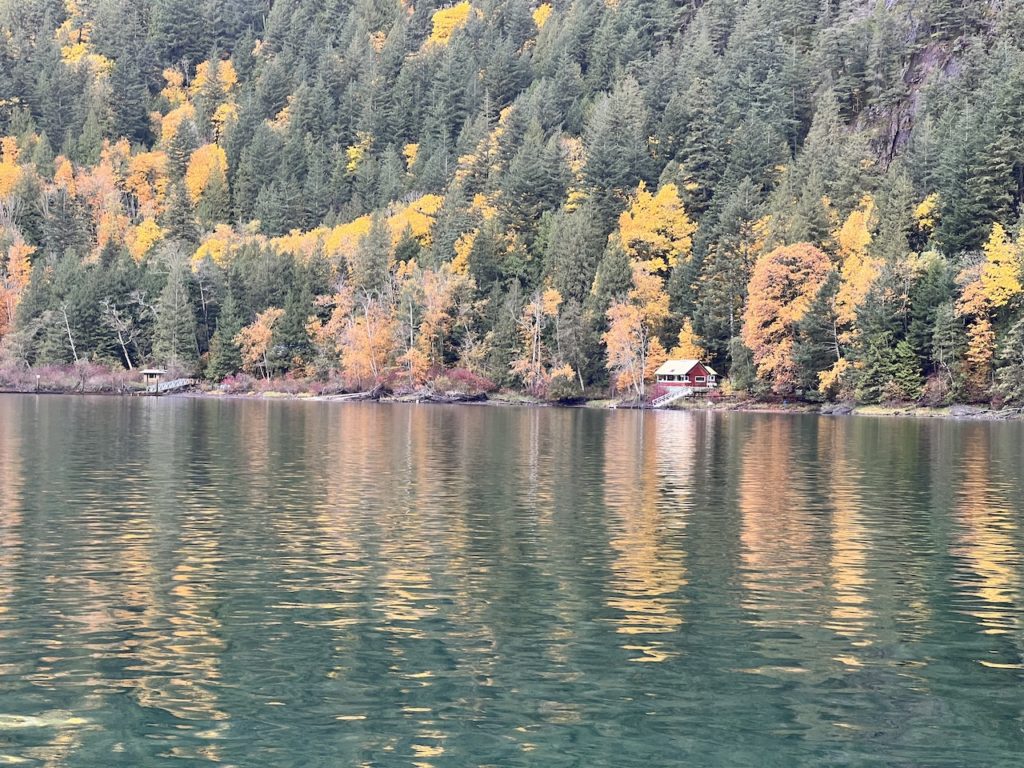
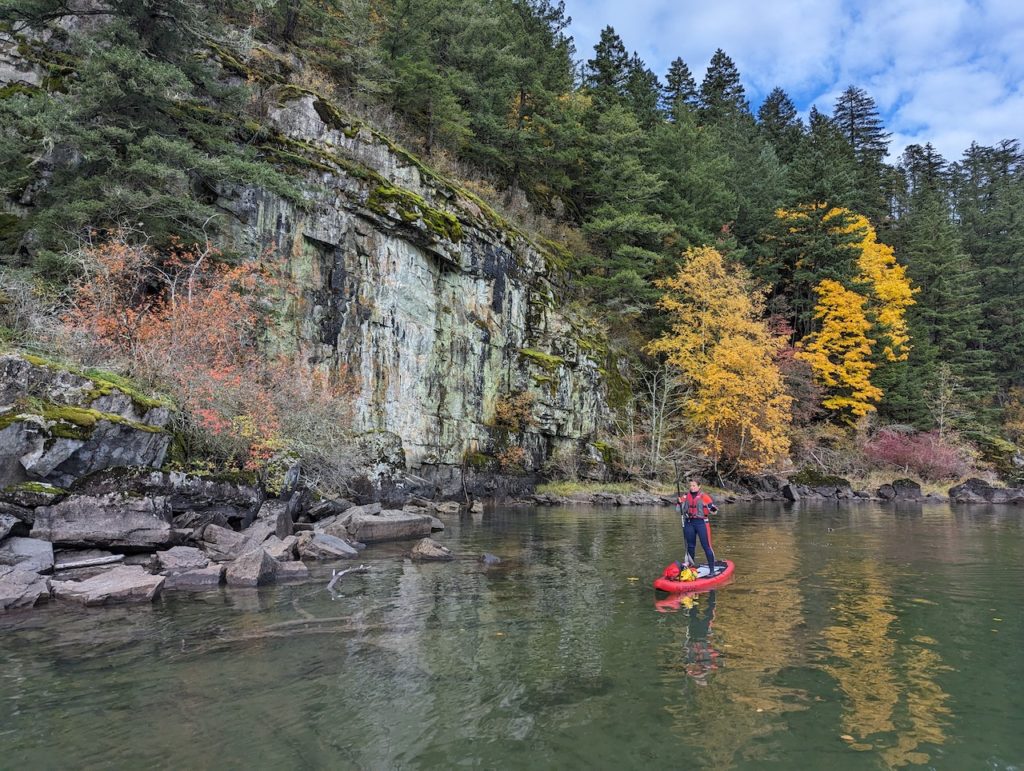

Harrison River can be broken into two sections. From Harrison Lake to Morris Creek is the deeper, slower section. Water flow here is almost imperceptible. To keep things interesting, Howard was keen on exploring the waterfalls and petroglyths (on the river right).
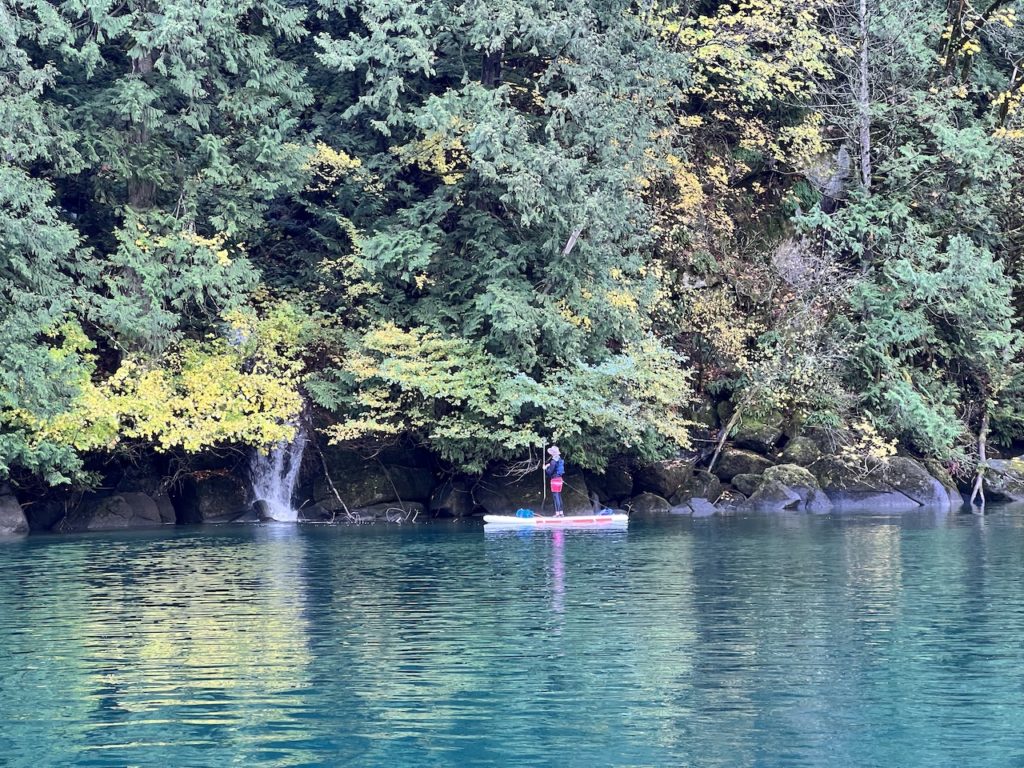
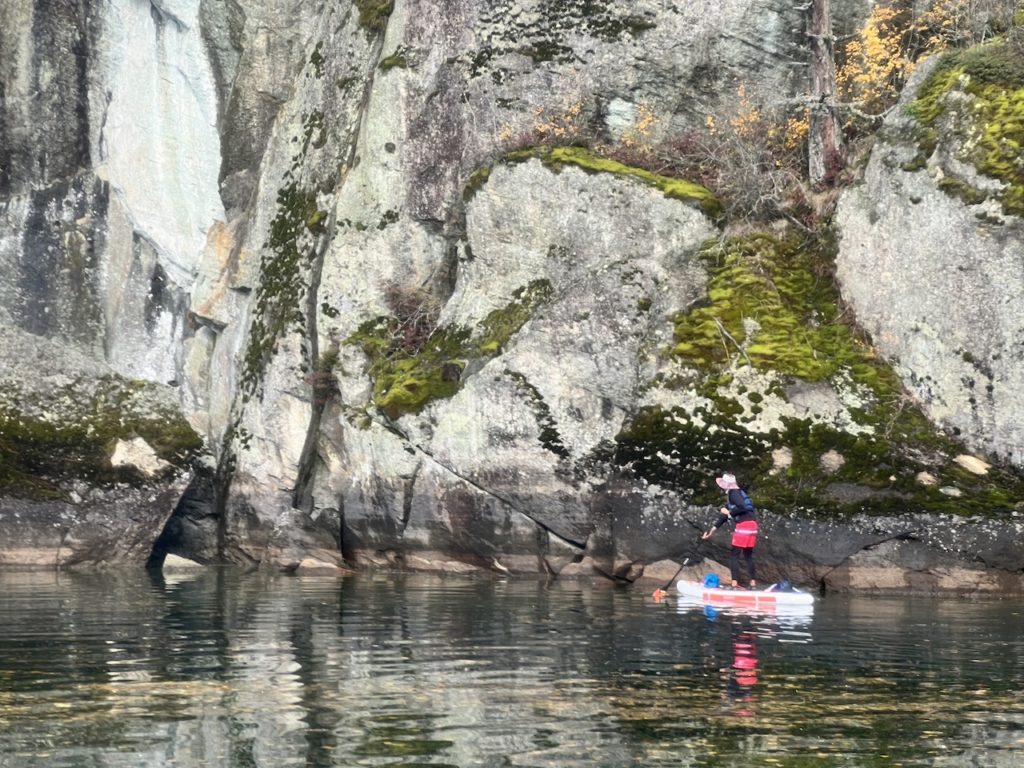

After two hours of leisurely paddling, we arrived at the mouth of Morris Creek, where the famed lunch beach is.
During my research for the paddle, I came across two interesting blogposts. The first one describes canoe camping near Morris Lake, which is upstream on Morris Creek. The second one describes following the first one and finding out that it’s actually a private property with no camping allowed.
We poked our heads up Morris Creek a little bit, but for the interest of time, we did not explore it further.
We turned around and headed to the lower section of Harrison River, which clearly picks up speed at a very distinct point just downstream from Morris Creek, where the river narrows and gets shallower.
The water was swift but not creating any standing rapids. The bigger hazard was the shallow banks that kept catching our fins. There were also lots of submerged debris like logs and branches. But here was also where the salmon congregate in large numbers.
We came upon a long narrow island that separates Harrison River into two channels for about 1km.
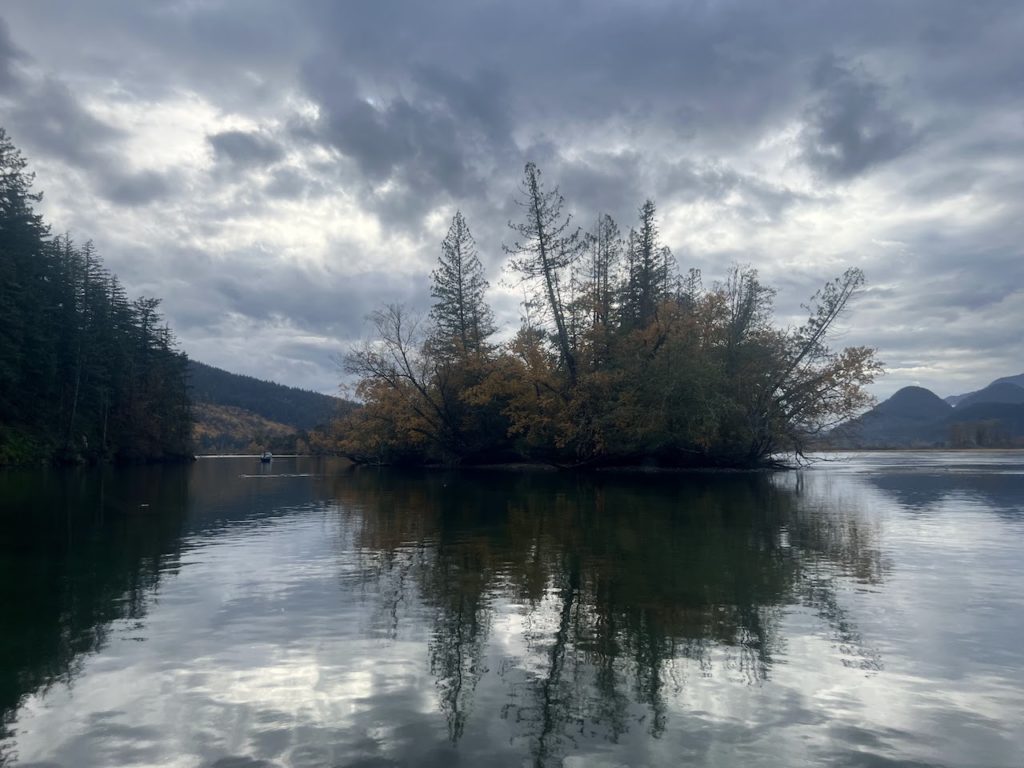
We decided to take the shallower, narrower side channel on the left and were greeted with lots and lots of spawning salmon. They were a lot easier to spot when the water is so shallow.
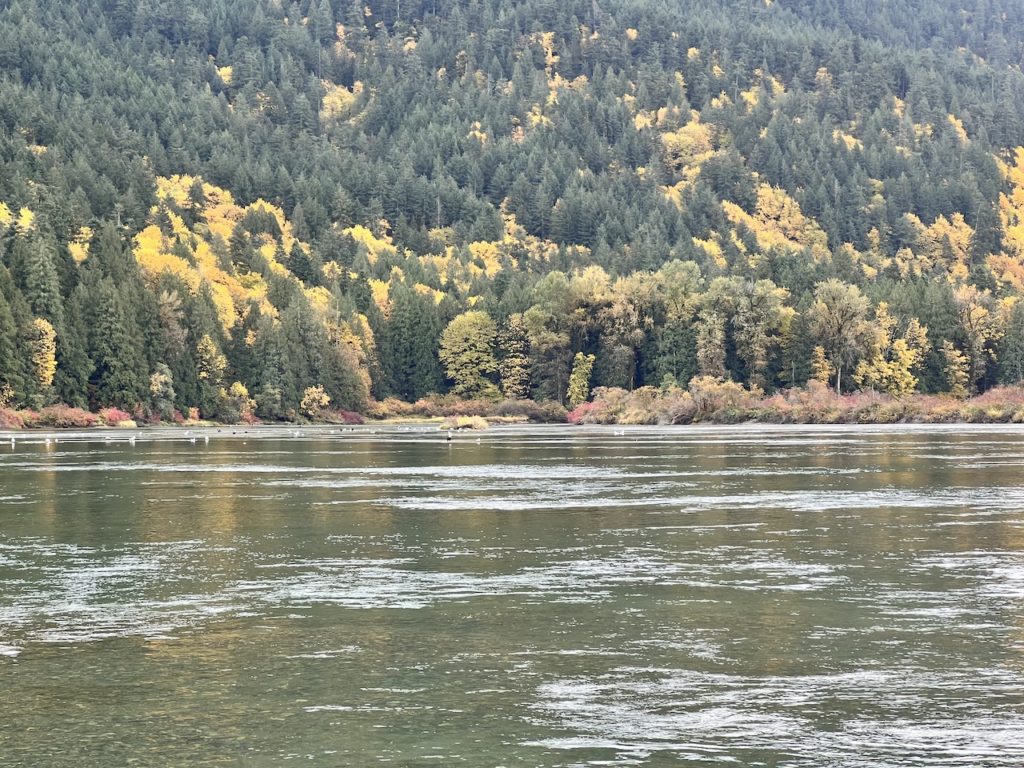
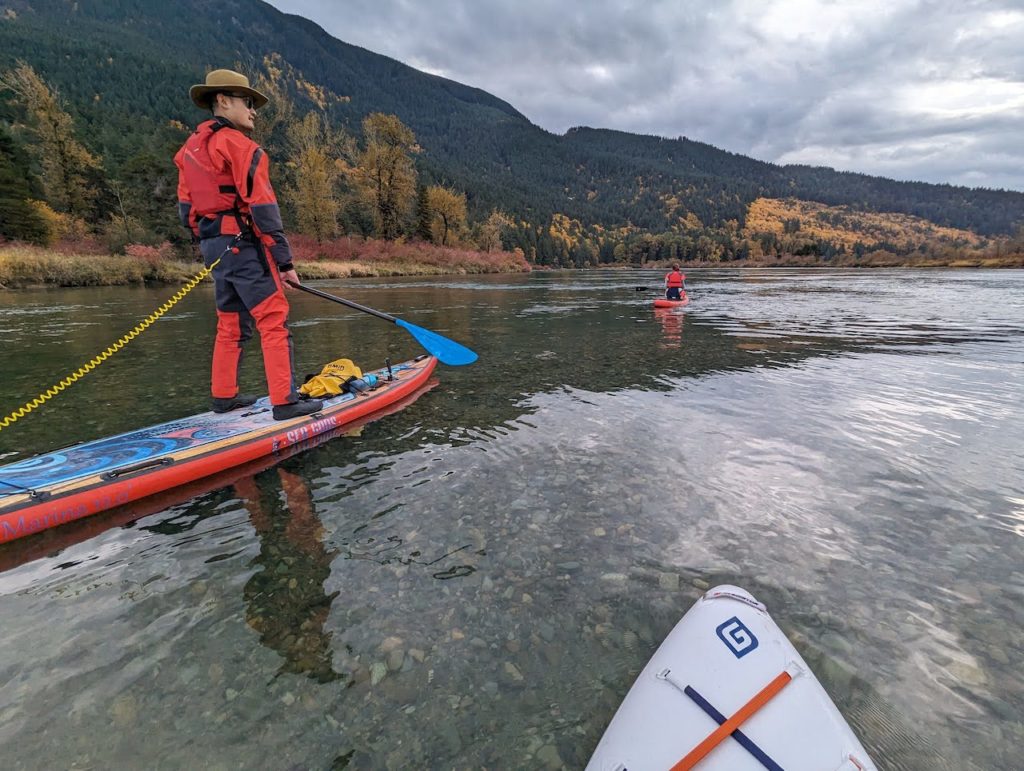
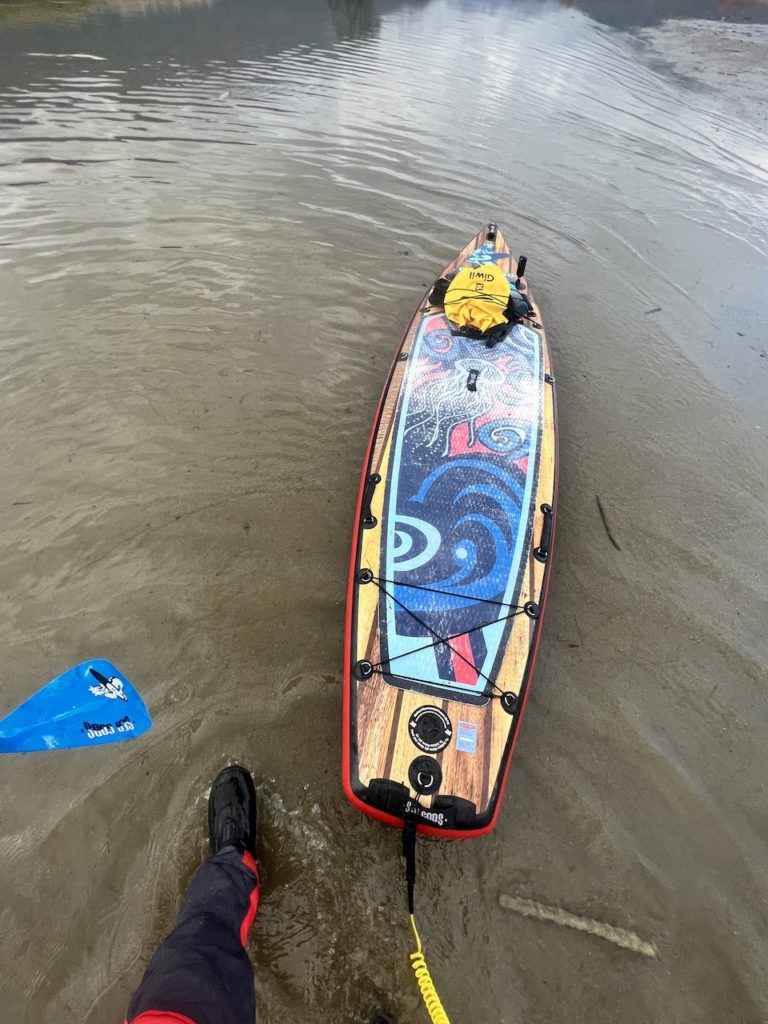
Due to the shallowness, I removed my fin and drifted the rest of the way. Howard swapped on his river fins and showed us how it’s done. (I ordered a river fin as soon as I got home.)
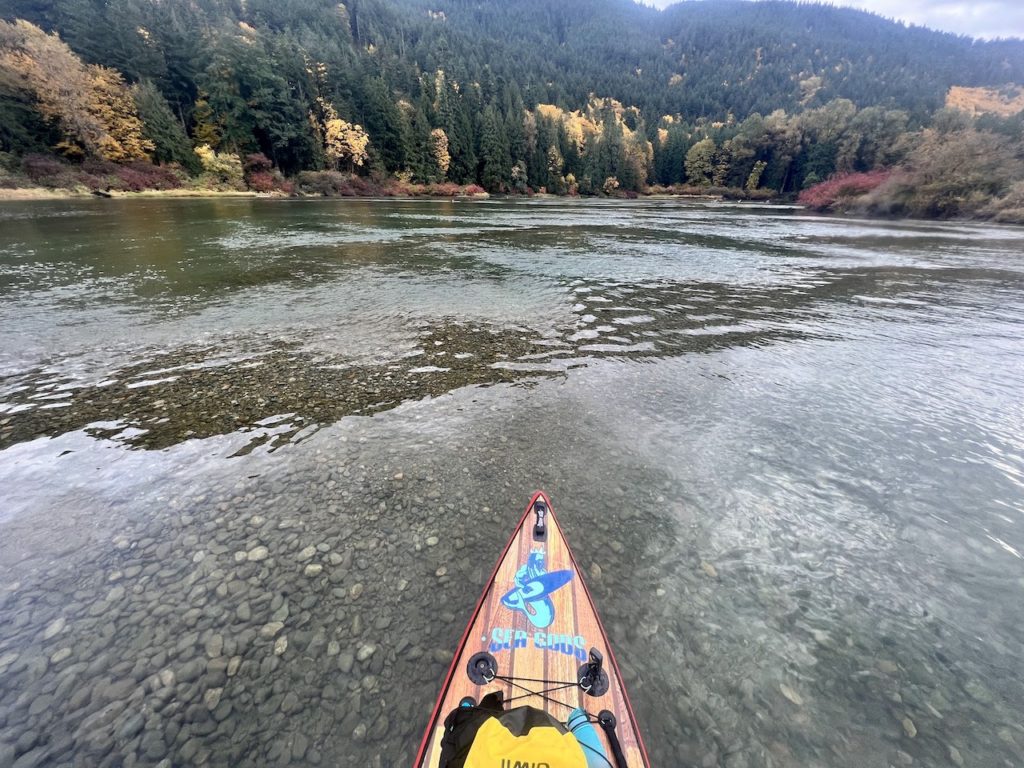
We had a good look at the salmons, but the eagles were surprisingly sparse. With Sylvie’s guidance, we slugged through some mudflats in search of the larger eagle feeding grounds.
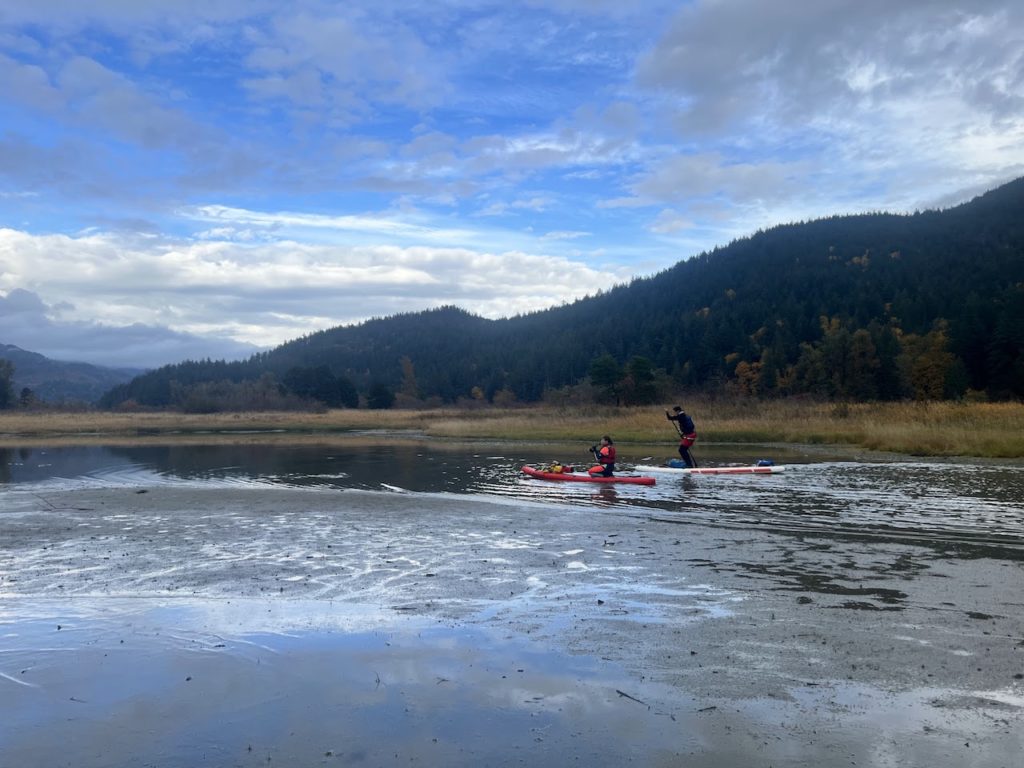
Finally, we found hundreds and hundreds of eagles across large swathes of river banks.
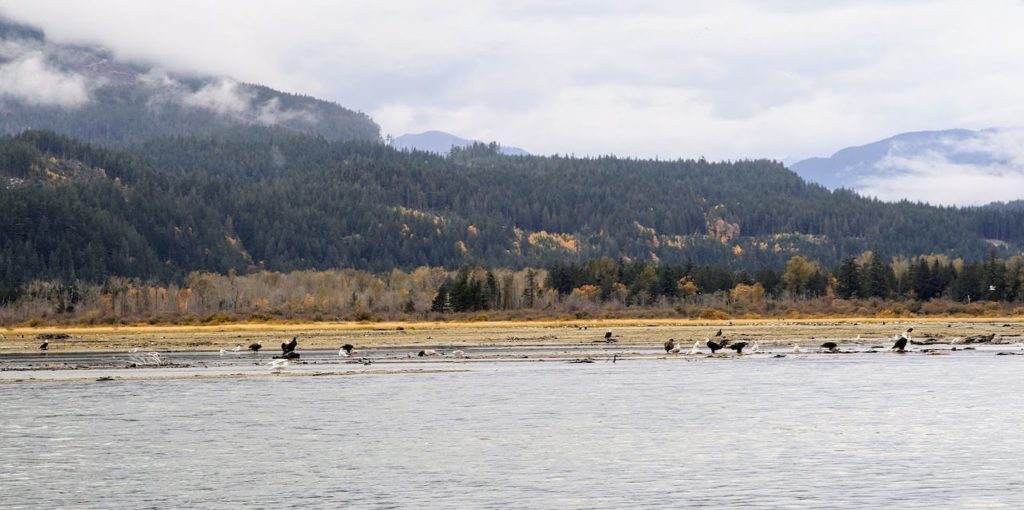
Interestingly, as Howard observed, the seagulls and eagles fed on salmon carcasses in harmony. But as we approached, only the eagles flew off; the seagulls did not care at all about us. They are probably resident lower mainland fries-eating seagulls, whereas the eagles are inherently wild and most of them flew in from the north as it gets colder.
Sylvie noted that the eagles are a lot lower downstream than where they usually hang out. (We found them near the Highway 7 bridge.) We mused about what caused this shift. Are the salmons spawning and dying further downstream than they used to?
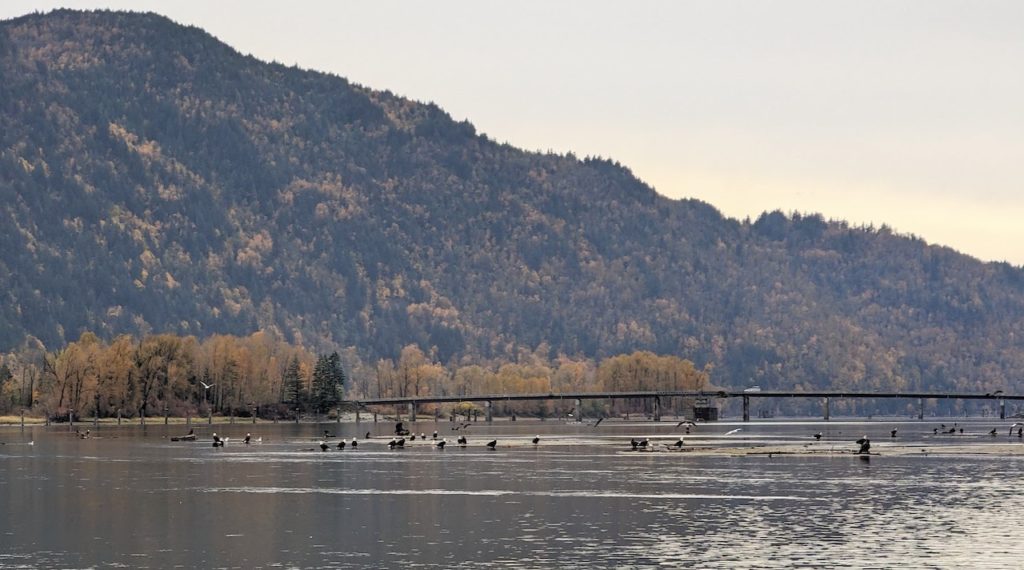
Soon after the Highway 7 bridge, we arrived back at Kilby at 2:30pm.
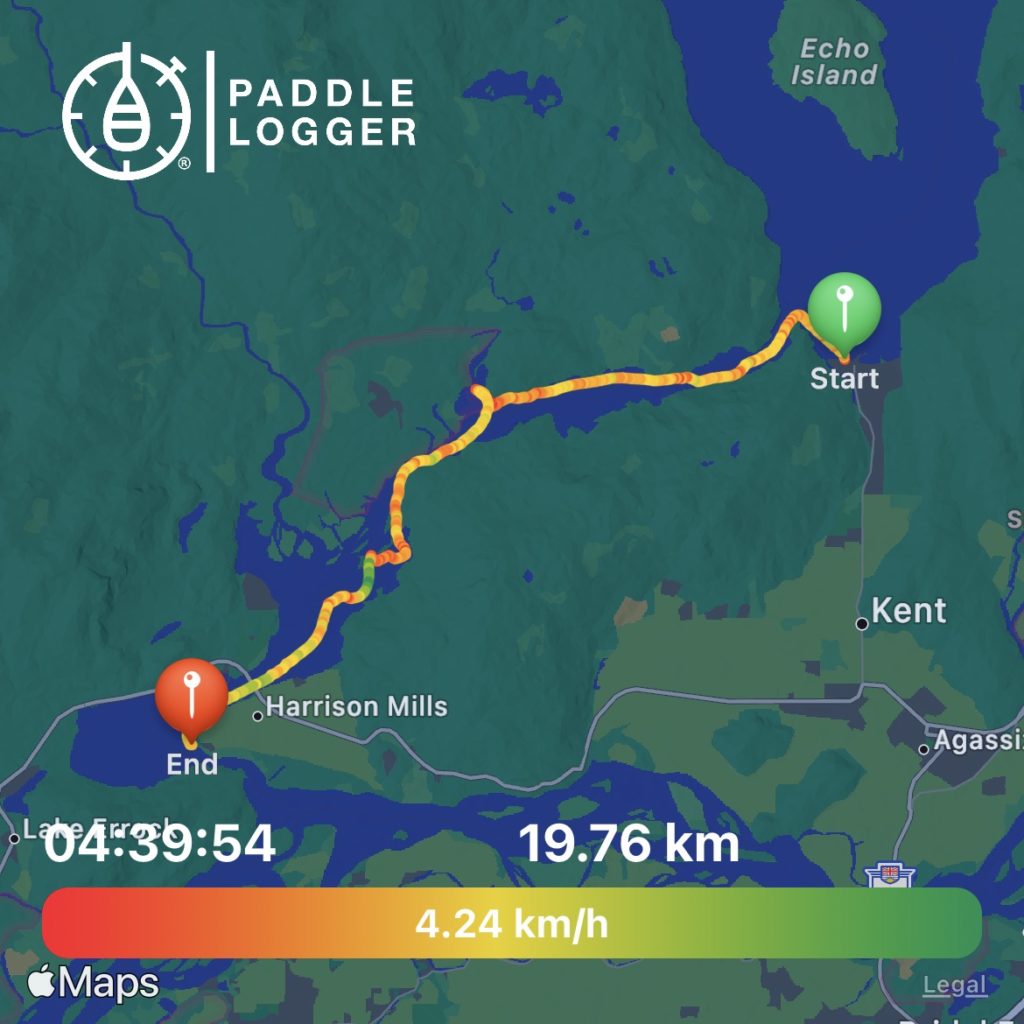
Trip Stats (Garmin Fenix 7 / Connect data):
- Total Time: 3 h 57 min
- Average Speed: 5.0 km/h
- Average Pace: 12 min 04 s / km
- Total Calories: ≈ 1 100 kcal
- Start: 8:52 a.m. at Harrison Hot Springs launch
- Finish: 12:50 p.m. at Kilby / Harrison Mills take-out
Distance: 19.67 km
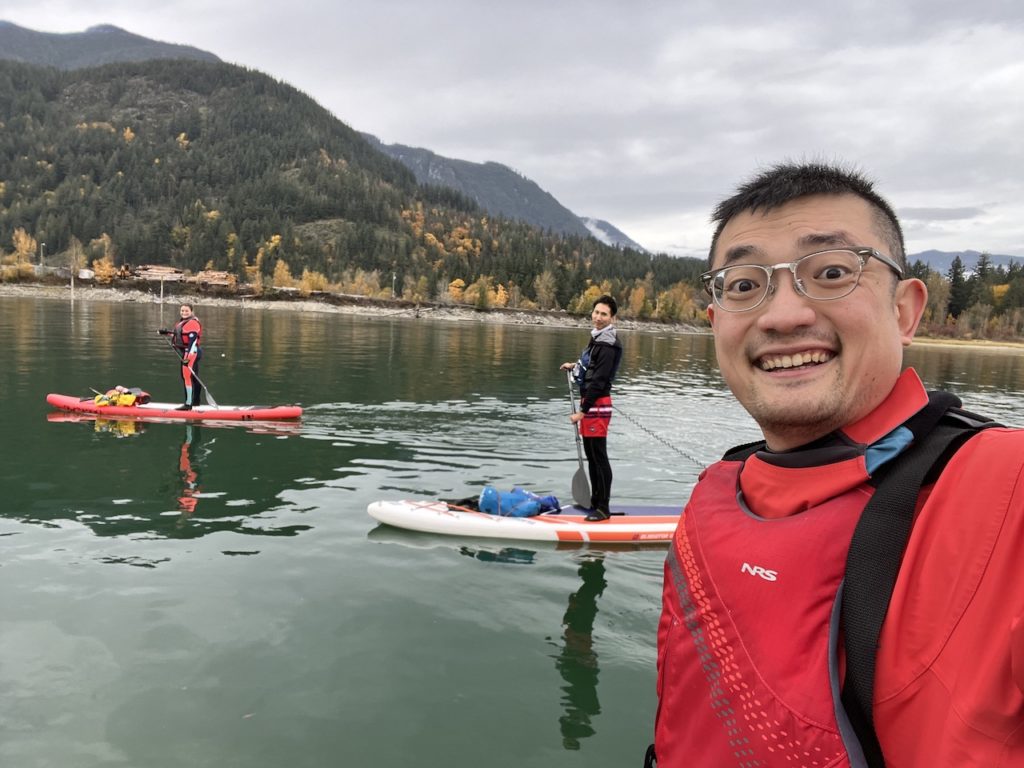

I recognize that we are extremely lucky with today’s Harrison River paddle. The winds were minimal, the boats were infrequent, and we didn’t see any other paddlers on the water. On a more typical day with winds and current, the river is usually a bit more challenging based on other paddlers’ accounts.
I’d definitely recommend doing this with a group with river experience, and bring your river gears (quick release leash and river fins).
2025 Paddle Log – October 18 Run
On October 18, 2025, eight paddlers (including myself) set out for another calm autumn descent of the Harrison River from Harrison Hot Springs to Harrison Mills/Kilby. The day began overcast and glassy-calm — barely a ripple on the lake and almost no wind. It was one of those rare October mornings where the clouds sat low and soft, but the air felt still and mild, perfect for an unhurried paddle.
Conditions on the River: The Harrison gauge below Morris Creek showed 8.9 m — a low-water level that exposed several sandbars near Morris Creek that none of us had ever seen before. These created some clear views of the river bottom and required river fins but were easily navigable. The current was moderate and steady, with no significant wind interference the entire day.
With the water so low, we opted to go on the bigger channel on the right when we came upon the bifurcation below Morris Creek. The river current was brisk, and we hit 10-13km/h. Both sides of the river were busy with fishermen and fishing boats were traveling up and down river.
Wildlife Notes: Salmon were lively and abundant, constantly leaping from the river along the main channel — a striking contrast from previous years when carcasses, gulls and eagles dominated the scene. This year’s October timing caught the salmon run in its energetic phase, with few dying fish yet. Consequently, the number of feeding eagles was noticeably lower, though we still spotted dozens along the way.
Weather Summary: low of 6 and high of 10C, with a drizzle that started just before we pulled out of the river, and barely any wind (3 km/h). The overcast sky kept temperatures stable and the water calm throughout the day. Half the group wore wet suits with layers on top, and were perfectly fine.
This October run captured the river at the beginning of its salmon and eagle run. Fishermen were out in force trying to catch some lively salmon. In November, the salmons will spawn and finish their epic life cycle in large numbers, attracting many more eagles.
Discover more from Outdoor Family
Subscribe to get the latest posts sent to your email.

Pingback: Sumas River Paddle (and an attempt at the Floating Forest) - Outdoor Family