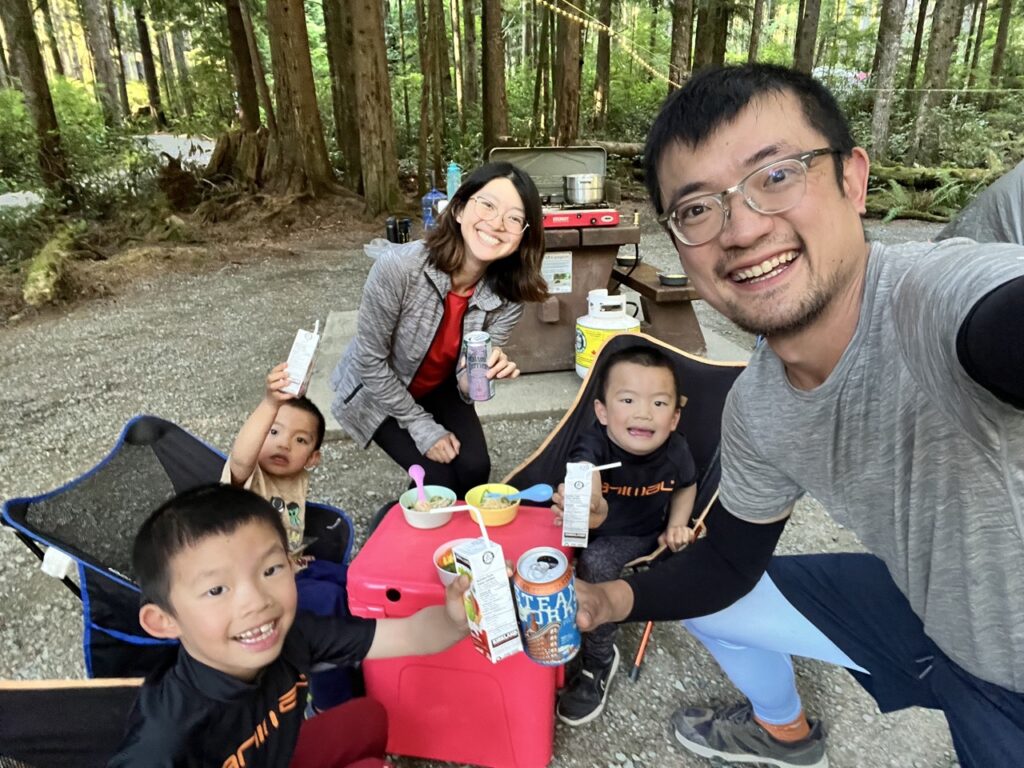
Are you a Vancouver family dreaming of fresh air, campfire stories, and starry skies—but not sure where to start? Camping with kids can seem overwhelming, but with the right plan, it can become one of your family’s most rewarding (and affordable!) adventures.
This guide gives you step-by-step instructions to make your first camping trip smooth, safe, and super fun.
🏕️ Step 1: Choose the Right Type of Camping
*If you have never camped in a tent before, you could consider going to a rustic cabin first. Maple Bay Cabins at Cultus Lake Provincial Park is a great gateway experience to an overnight stay in the BC Park system.
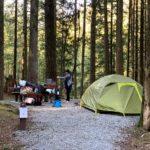
For first-timers committed to trying tent camping, front country car camping is the best option. This means driving right up to your campsite—no hiking or carrying gear for miles. Not only that, many BC Parks and private campgrounds offer what we call ‘deluxe amenities‘: hot showers, garbage collection, and flush toilets.
Recommended Campgrounds for Beginners:
- Alice Lake Provincial Park (1.5 hrs from Vancouver – great for kids!)
- Golden Ears Provincial Park (1 hr – beautiful forest & lake)
- Cultus Lake Provincial Park (1.5 hours – beautiful, warm medium sized lake)
- Porpoise Bay Provincial Park (Sunshine Coast – ferry ride adventure!)
- Rolley Lake Provincial Park (close & kid-friendly)
Once you are comfortable with camping in these deluxe campgrounds, you can venture out to more rustic, but still drive-in campground where you may only have a pit toilet. Some recommended ones near Vancouver are: Sasquatch, Chilliwack Lake, and Nairn Falls.
✅ Pro Tip: check out BC Parks reservations and learn the rules about reservations. Currently most campgrounds are allowing reservations 4 months in advance of the first day of your reservation.
🧳 Step 2: Gather Essential Gear
Camping math: the money you save from a week of hotel stay can buy you enough good quality camping gears that will let you enjoy for years. But don’t stress about fancy equipment when you are first starting out. Start with the basics. You can look into renting or borrowing gear before buying too.
We’ve listed our camping packing list before, and we continually learn from other campers and add to it. To summarize here:
🛏️ Sleep Essentials:
- Tent (big enough for the whole family)
- Sleeping bags (appropriate for the season)
- Sleeping pads or air mattresses
- Pillows or camp cushions
🍳 Cooking & Eating:
- Portable stove or BBQ
- Propane or fuel
- Cooler with ice packs
- Reusable dishes, cutlery, and cups
- Water jugs (most sites have potable water)
- Easy-to-cook meals & snacks (see below)
🧺 Other Must-Haves:
- Camping chairs
- Flashlights or headlamps
- First aid kit
- Bug spray, sunscreen
- Towels & bathing suits
- Garbage bags (leave no trace!)
✅ Optional for comfort and fun: Hammock, books, games, s’mores sticks, baby wipes.
🍔 Step 3: Plan Simple, Kid-Friendly Meals
First-time campers don’t need gourmet meals. Stick to easy, no-fuss food.
🥞 Sample 2-Day Meal Plan:
Day 1 Dinner: if we are arriving to camp around dinner time, we often just bring some take-out food from the road. Pizza or Happy Meals would suffice. This gives us more time to set up the tent and explore the campground before it gets dark.
Day 2 Breakfast: toast, bread, juice boxes, oat milk that don’t need refrigeration. We only use the stove for coffee and avoid a hot breakfast to save time cleaning up.
Lunch: Sandwiches, hot dogs, or hamburgers
Dinner: deep frozen pre-made meals from home such as pasta sauce or minced pork stew. Boil a pot of water for some noodles. When the noodles are ready, put the half-thawed packet into the pot and turn off the heat.
Snacks: Trail mix, crackers, fruit, granola bars
✅ Tip: Prep at home—pre-make meals when possible and deep freeze for 24 hours. These double as cold packs for other items in the cooler too.
🐿️ Step 4: Keep Kids Happy at Camp
Kids LOVE camping. I think it’s because of being in nature, abundance of family time, and taking a break from rigid rules and routines. Our kids don’t need a lot of extra entertainment, but we let them each pack a small backpack full of stuff they want. As long as it fits, and it won’t attract bears into the tent, they can bring it. They bring the usual suspects: books, stuff animals, and their current favorite toys.
We started bringing bikes to camp in 2023, and we’ve always brought them since. There aren’t always good biking trails around the campground, but even biking around the campground is fantastic fun for the kids
Other Fun Ideas:
- Scavenger hunts (find a pinecone, bird, feather, etc.)
- Nature crafts (paint rocks or make leaf prints)
- Observe insects or snails
- Stargazing (but they usually lose interest soon since it’s usually past bedtime)
- Walkie-talkies
- Hammock swings
- Fire watching when fire is allowed
✅ Let them help with tasks— getting water, setting the table, or washing dishes.
🧼 Step 5: Stay Safe and Clean
Many BC parks have toilets and drinking water, but check ahead to see if there is a boil water advisory. Some have hot showers too, but a change of clothes before bed is usually good enough for a night. Thruhikers don’t shower for weeks on end, and they seem to be the happiest people.
Safety Tips:
- Keep food locked in your car to avoid wildlife encounters.
- Teach kids not to wander off alone.
- Bring a small first aid kit and any medications.
- Follow campfire rules—check for fire bans! Teach kids fire safety early. Never leave fire unattended.
- Always wear a helmet when biking.
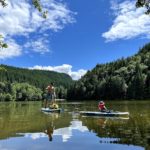
- Many campgrounds are near bodies of water. Life jackets and water safety is non negotiable.
🌟 Step 6: Keep Expectations Low (and Spirits High)
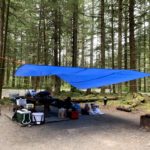
Things might not go perfectly—and that’s okay! Rain might come (which is actually fun if you are prepared to tarp up!). Mosquitoes will bite. Someone might forget the sleeping pads. It’s all part of the adventure. Maybe you can’t do some things you wanted to do, or maybe you have to drive into town to buy some things you forgot. But look at the bright side: you are camping!
Let go of the idea of a “perfect” trip and focus on making happy memories.
📅 Bonus: When to Go
Peak Camping Season: late May (Victoria Day long weekend) to early September (Labor Day long weekend). If you want to go to a deluxe provincial park campground on a weekend in this window, set your alarm clock 4 months in advance and good luck!
Best Weather: July to September, which is warmest for water activities and longest day light hours. But this is also peak mosquito season.
Shoulder Season (if you want to have peace & quiet, and a good chance for having campfire): May and October, but it might be cold for water activities, and the day time is significantly shorter.
🧭 Final Thoughts
Camping is one of the best ways to unplug as a family, bond with your kids, and reconnect with nature—especially here in beautiful British Columbia.
Start small. Stay close to home. And remember: the goal isn’t perfection—it’s connection.
Happy camping! 🌲🔥
Discover more from Outdoor Family
Subscribe to get the latest posts sent to your email.